
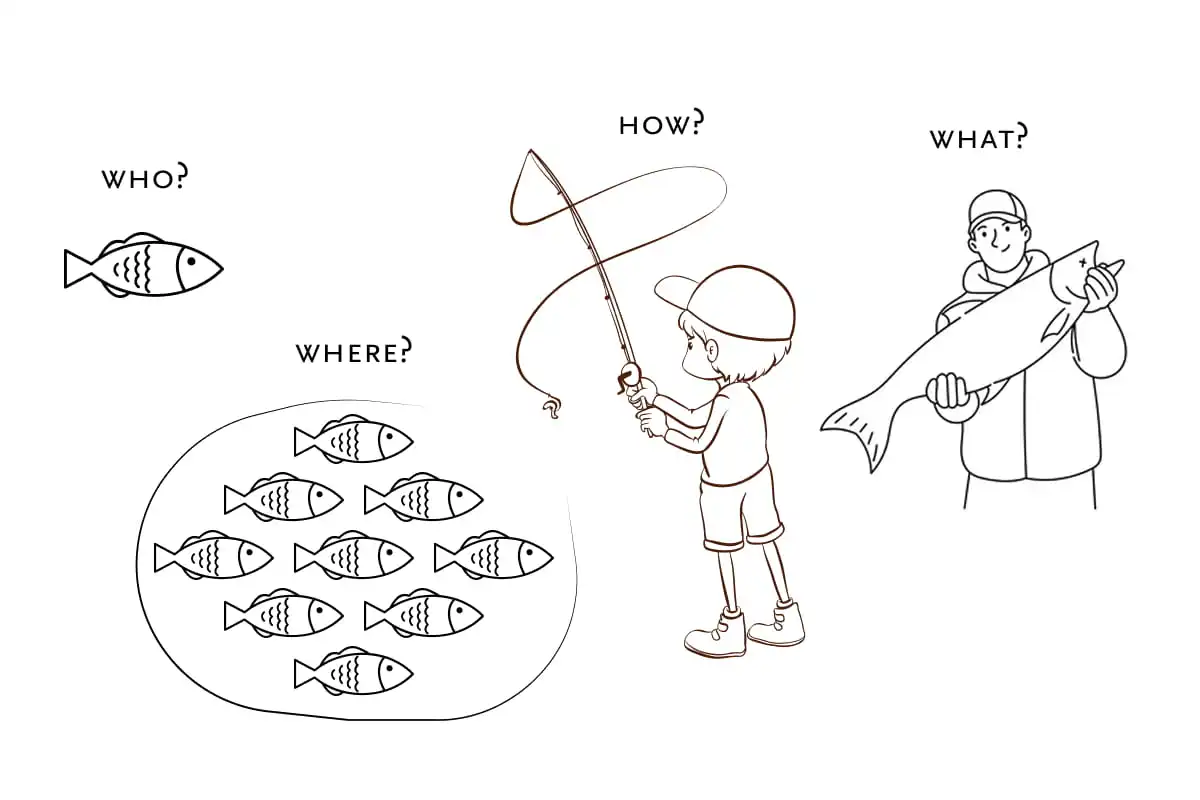
A sales funnel beats a website every time. But the question is: How do you build one that actually works?
To do that, you need clear answers to 4 questions:
- Who are your customers?
- Where do you find them?
- How do you attract them?
- What results do you help them achieve?
Let’s break this down.
1. Who Are Your Customers?
More accurately: who is your dream customer?
Most businesses make the same mistake. They assume everyone is their customer. And on the surface, that sounds logical: more people = more sales.
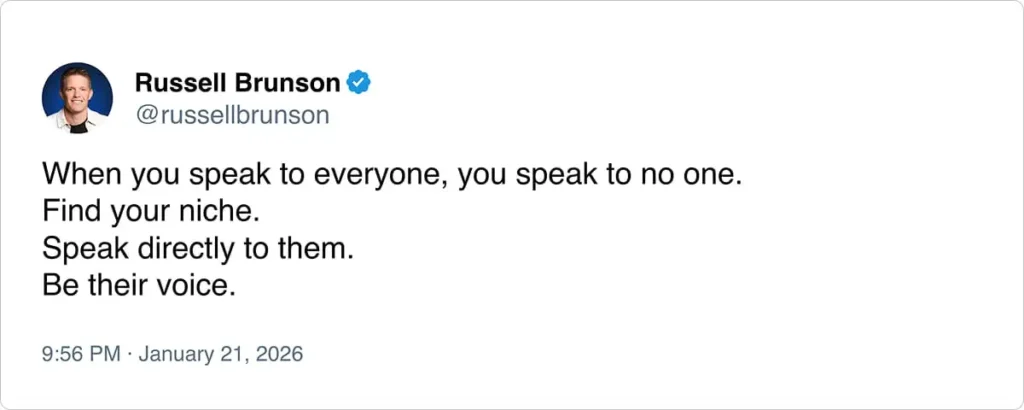
But in reality, the opposite happens. When you speak to everyone, you speak to no one.
Different ads, different emails, different landing pages, different calls to action, all of it creates confusion. And confusion kills conversion.
Your audience can sense it immediately:
“This business doesn’t really understand me.”
Now if you just focus on one thing:
- Your one dream customer
- Their one dominant desire
- Your one clear idea
- Your one irresistible offer
Suddenly, everything becomes easier. Your messaging sharpens, your positioning improves, and your marketing starts to feel personal.
So instead of thinking in terms of audiences, think in terms of one person. The person who will benefit the most from what you sell. And try to find every information about that person. Ask yourself:
- What do they want more than anything right now?
- What pain are they desperate to escape?
- What are their beliefs about themselves and the world?
- How do they describe their problem in their own words?
Know them so well it feels uncomfortable.
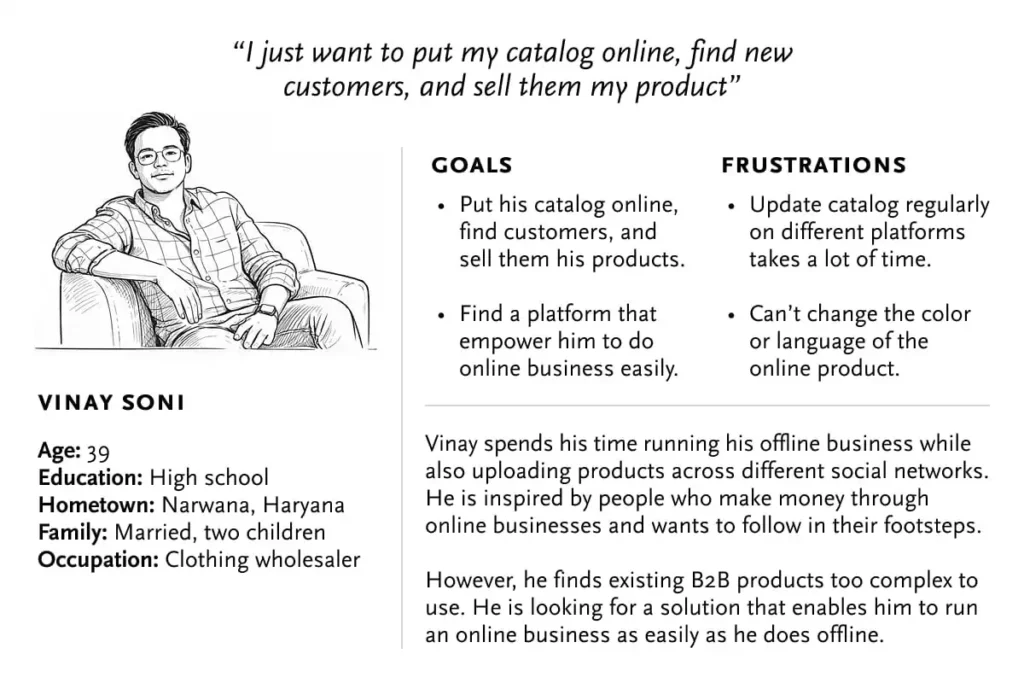
A practical exercise: Create two fictional profiles. One male, one female. Give them names. Add photos. Write down their age, job, fears, goals, and frustrations. Print them out and keep them next to you. Every decision you make—from copy to product features—should be made with them in mind.
2. Where Do You Find Them?
People with similar desires or pain points gather in similar places.
Job seekers go to Naukri and LinkedIn. Fashion enthusiasts scroll Instagram and Pinterest. Hungry people open Zomato and Swiggy.
This isn’t random. It’s predictable. And your job is to map those places and specifically find out:
- Who they follow and trust
- What websites/apps they use daily
- Which Facebook/Instagram groups they belong to
- What keywords they search for on Google
- What content they consume obsessively
Once you know where they already are, you don’t need to convince them. You simply show up there with the right message. Selling becomes easier when you stop chasing people and start meeting them where they already are.
3. How Do You Attract Them?
At the core, businesses sell only three things: products, information, and services. And almost all of them are commodities. Meaning, your customer can buy the same thing from someone else. So the question is: why should they choose you?
The answer is simple: Attention comes first. Differentiation comes second.
Your customer is distracted. They’re scrolling, watching reels, shorts, and ignoring ads. You have seconds to grab their attention.
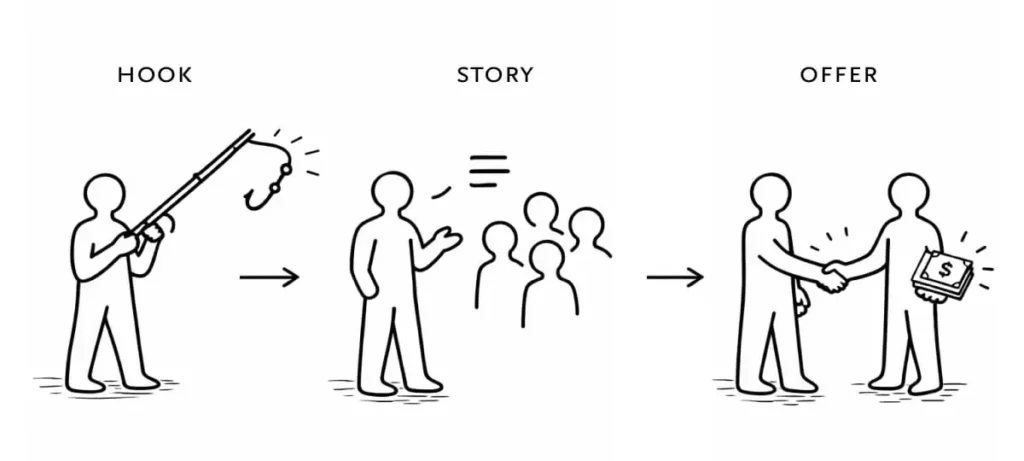
That’s where the hook comes in. A strong hook interrupts their pattern and speaks directly to their desire or pain and makes them feel “This is for me.”
Once you have their attention, you tell them a story to build rapport with them and challenge their false beliefs and increase the perceived value of your offer.
And finally you present your irresistible offer. But your offer isn’t just what you sell. It’s how you frame it, the outcome it promises, and the transformation it delivers.
Hook. Story. Offer. That’s the combination that attracts your dream customers.
4. What Results Do You Help Them Achieve?
People don’t buy products. They buy outcomes. They buy relief, progress, a better version of themselves.
They aren’t asking:
“What are you selling?”
They’re asking:
“Where will this take me?”
That’s the real business question. If your dream customer pays you, what changes in their life? What problem disappears? What new identity do they step into? What does success look like for them?
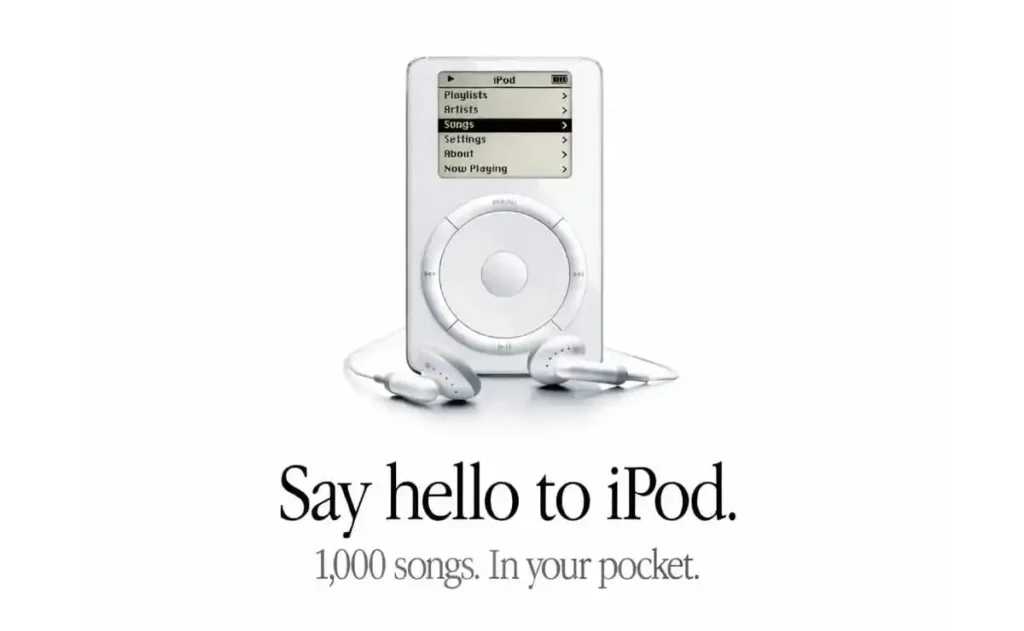
When the value is clear and compelling, price becomes secondary. Because when someone believes: “I’m getting 10x value for 1x cost,” they don’t hesitate. So ask yourself the final question:
If your customer trusted you completely—
where would you lead them?
That answer is the foundation of your funnel.
Leave a Reply