
No one knows me.
I don’t have any credibility.
And why should anyone listen to me in the first place?
These are the kinds of questions that naturally come to mind when you begin your online journey.
Even if you’re an industry veteran, you still have to prove yourself. You have to start from zero, build in public, and show up every day.
But even doing that consistently for years doesn’t guarantee success. And honestly, there is no shortcut around that.
But there is one strategy that can dramatically speed up the process.
It can help you to strengthen your authority, establish credibility, and easily build an email list. In fact, when executed properly, it can help you build momentum surprisingly fast.
What is it?
A summit funnel.
It’s another type of lead funnel with a familiar goal: Collect a prospect’s email address in exchange for something valuable.
But the mechanism works differently. Let’s see how.
Summit Funnels
A virtual summit funnel is a free online conference that allows you to leverage other people’s audiences. It helps you build relationships with established experts in your niche, co-brand yourself with them, and drive traffic from their email lists into your funnel.
Look, it’s difficult to start an online business. In the beginning, you usually don’t have an email list, authority, credibility, or even testimonials.
And organic methods like blogging, interviews, and posting on social media can take years to produce meaningful results. While paid ads may work temporarily, they’re rarely a sustainable long-term solution for beginners.
That’s why summit funnels are often considered one of the fastest ways to build momentum online. Because when people see your face alongside already established influencers, some of that trust transfers to you automatically.
You stop looking like just another beginner on the internet. And start looking like someone worth paying attention to.
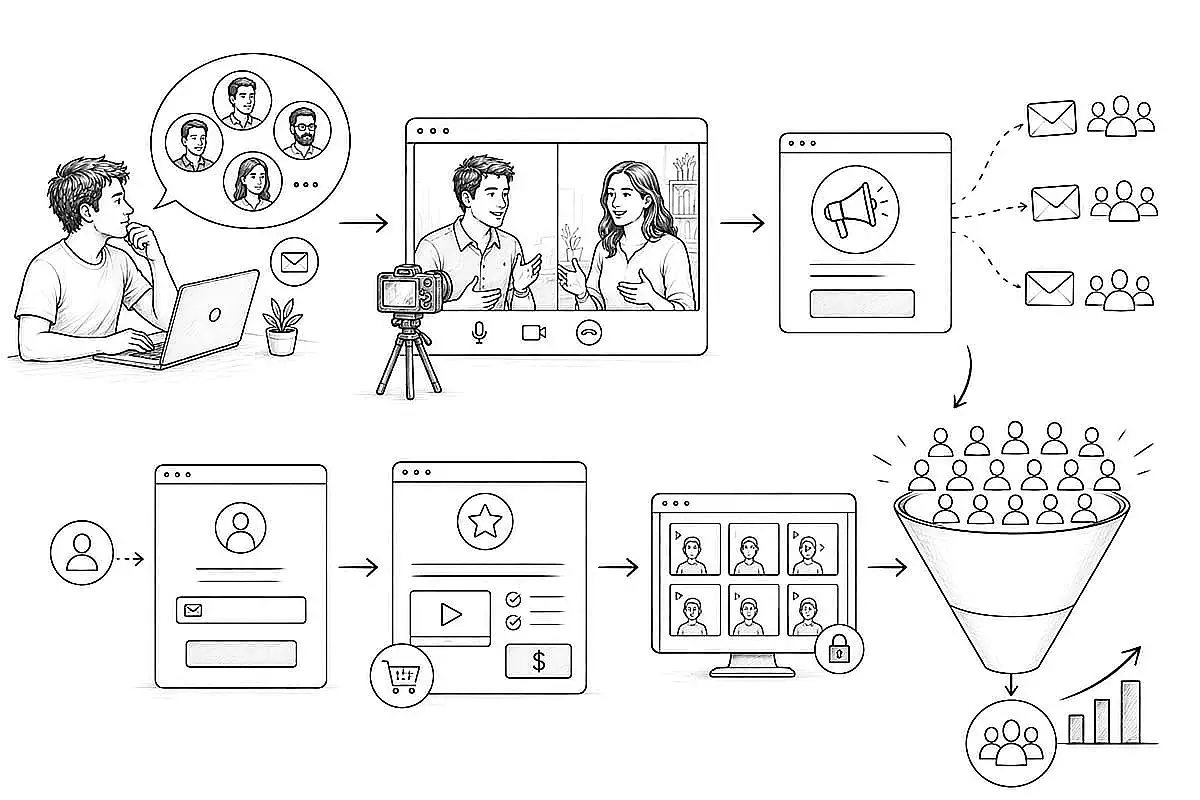
A summit funnel usually consists of three parts.
1. Invitation: The first step is inviting experts in your niche to participate in the summit. Ideally, each speaker already has an email list filled with your dream customers. Most virtual summits feature around 30 speakers. Though in reality, you’ll need to contact far more people before finalizing your list of confirmed participants.
2. Interviews: The second step involves recording interviews with your guest speakers. These interviews are later broadcast during the summit event, for a limited period of time to create urgency and increase engagement.
3. Promotion: This is where the real growth happens. Once the interviews are recorded, the guest speakers join with you to promote the summit before it goes live.
When they promote the summit to their email lists, a portion of their audience becomes part of your audience. You collect the email addresses of people who register to watch the free summit. And that’s how your own email list grows rapidly.
You can later monetize this audience through product offers, partnerships, coaching, or follow-up funnels. In other words, you’re borrowing trust, authority, and distribution from people who already have an audience.
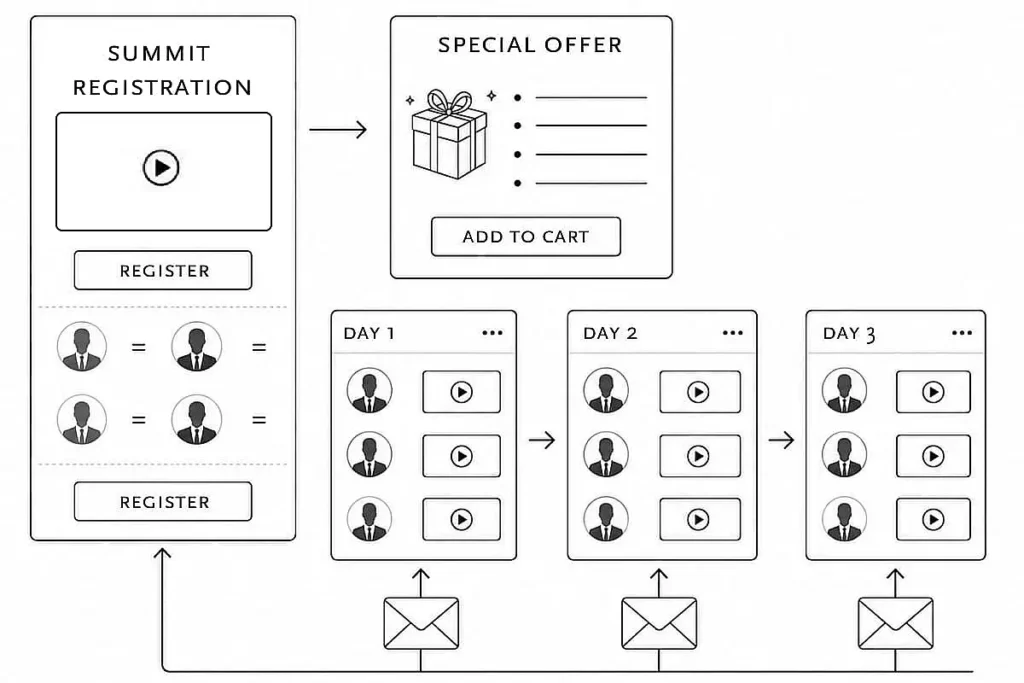
To host a virtual summit, you generally need three pages.
Page 1: The Registration Page
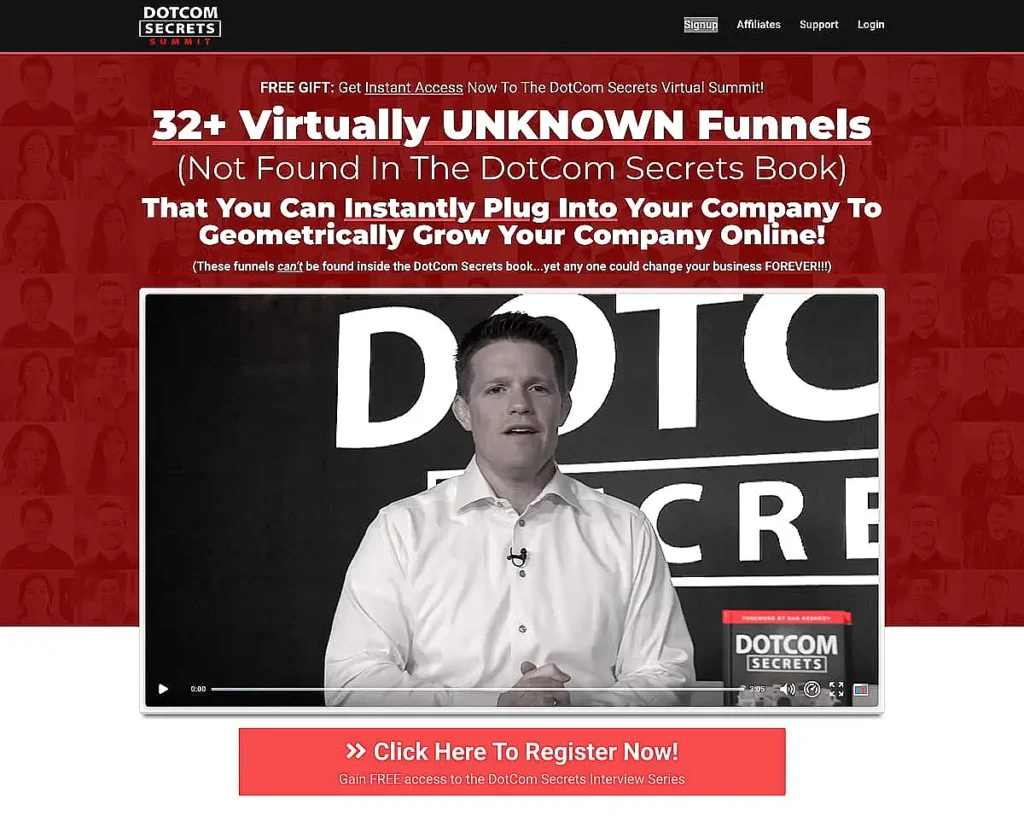
The first page in a summit funnel is the registration page.
Its objective is simple:
Capture the visitor’s email address in exchange for free access to the summit.
In other words, the page turns visitors into registered attendees.
Registration pages are usually long-form because you need to communicate the summit’s topic, the event dates, and why the summit is worth attending.

You also feature headshots, names, and short bios for each guest participant. When visitors see familiar faces they already trust, your credibility increases automatically. That trust transfer is one of the biggest reasons summit funnels convert so well.
Page 2: The Special Offer Page
Once users register for the event, they are redirected to a page that presents a low-ticket offer. The page contains three main sections:
1. Registration Confirmation: The first section reassures visitors that their registration was successful. This includes a thank-you message, confirmation details, and instructions letting attendees know that event information has been sent to their email address.
2. The All-Access Pass Offer: The second section introduces an “All-Access Pass.” It includes a sales video where you explain the value of the offer.
The free summit acts as the lead magnet. Attendees can watch the interviews for free, but only for a limited period of time. However, when they purchase the All-Access Pass, they receive permanent access to the interviews inside a membership area.
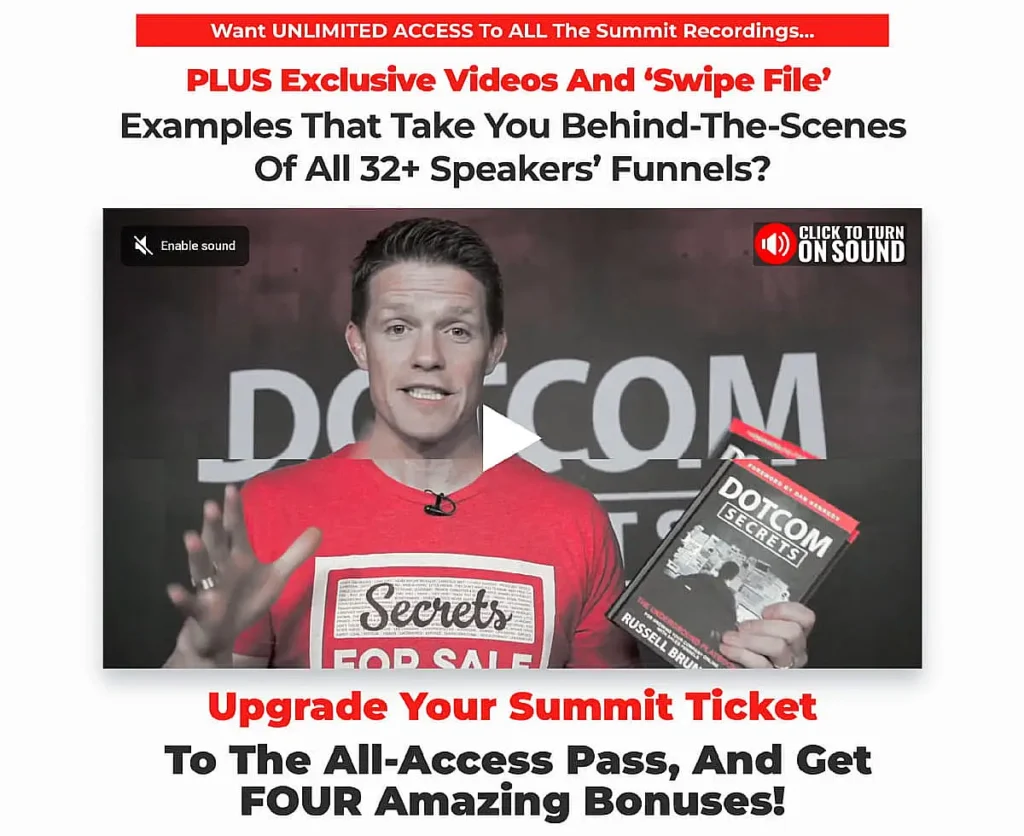
Instead of rushing through multiple interviews during the event window, attendees can consume the content at their own pace. And that convenience becomes a strong selling point.
You may also include bonus materials like exclusive interviews, downloadable MP3 files, transcripts, or speaker notes to increase the perceived value of the offer.
3. The Order Form: The bottom section contains the actual order form where attendees can purchase the offer.
Some businesses use this page to introduce the next step in their value ladder. For example: a paid challenge, a workshop, a membership, or a coaching offer.
In these cases, unrestricted summit access can be positioned as a bonus rather than the core product itself. This strategy works because the traffic entering the funnel is already warm.
Page 3: The Broadcast Page
Finally, you need to deliver the actual virtual summit experience to everyone who registered whether they purchased the special offer or not.
Unlike the previous pages, the broadcast pages are not shown immediately after registration. Instead, attendees receive access links through email on the specific days the summit is scheduled to run.
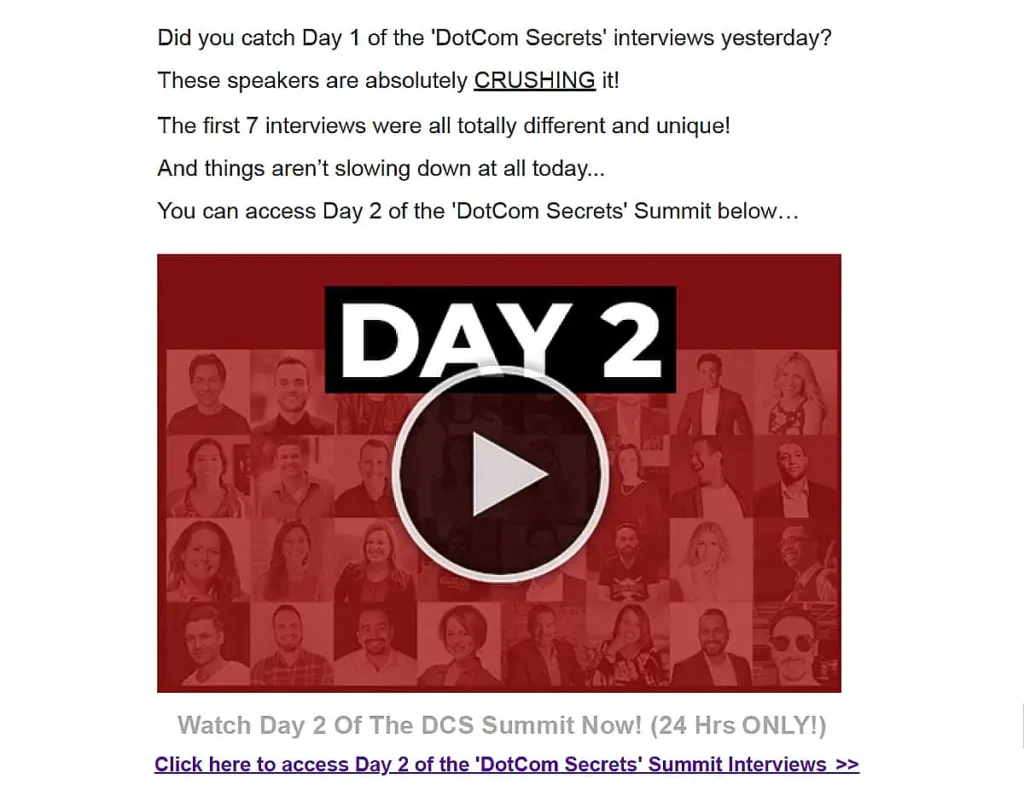
Although the interviews are pre-recorded, the summit itself is structured like a live event. That’s important because limited-time availability increases urgency, engagement, and participation.
On Day 1 of the summit, you publish a selected group of interviews on the first broadcast page. A countdown timer shows how much viewing time remains before the interviews expire. A 24-hour viewing window usually works best because it gives attendees a fair opportunity to watch the content.
Once Day 2 begins, the Day 1 interviews are removed from the broadcast page. At that point, the free viewing period has expired. And the only way to regain access is by purchasing the All-Access Pass or special offer.
At the same time, the Day 2 interviews are published and attendees receive the new broadcast link via email.
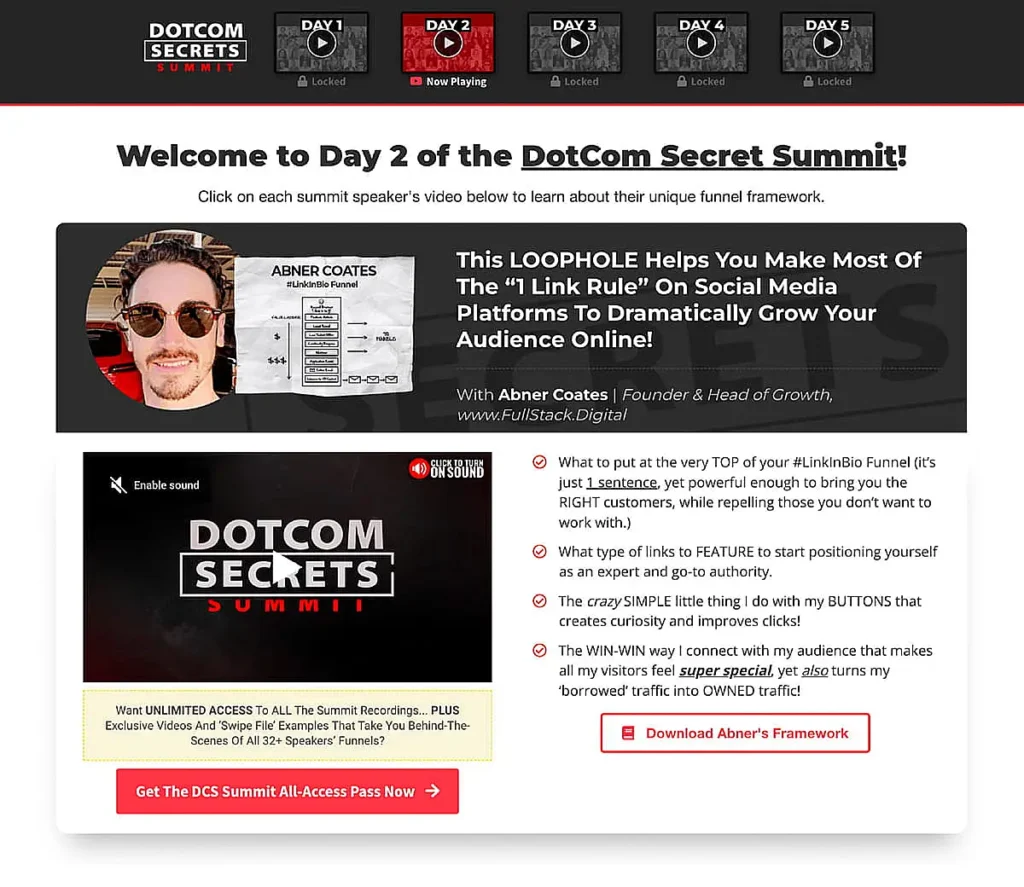
This cycle continues throughout the summit: new interviews are released and older interviews are removed.
Most virtual summits last around 3–4 days because longer events struggle to maintain audience attention and engagement. Throughout the summit, you continue promoting the special offer.
And even after the event ends, the funnel can continue generating revenue through replay access, memberships, coaching programs, or additional offers.
A summit funnel allows you to:
- grow your email list quickly,
- borrow trust from established influencers,
- build relationships with your audience,
- and move new subscribers into higher-value offers over time.
In many ways, a summit funnel is less about the summit itself and more about creating a fast-moving ecosystem of trust, authority, and distribution.
Leave a Reply