

I used to know nothing about business. And that ignorance kept me on the payroll. Nine hours a day (plus three hours commuting). Five days a week. Twenty years of my life. In return, I got a skinny-fat body. $50,000 in savings. Broken relationships.
It would have continued like that, until one day I got a message from my CTO:
“Gaurav, we need to talk. Call me when you’re free.”
And guess what?
He told me the company was shutting down. And I had a month’s notice. Of course, I was shocked. But then I thought, who cares? I’ll find another job.
But I had overlooked something important.
I wasn’t 20 anymore.
The Reality Check
I was forty-plus. I had spent my entire life in startups. I was earning well above the average designer’s salary. I was used to comfort.
And the market had moved on. It was full of younger people: faster, cheaper, and just as capable.
Still, I thought it would be difficult, but not impossible, to find a job.
I was wrong.
I spent the next 3 years looking for a job. And what I found was worse than rejection. Nobody even called.

In that time, I burned through my savings, maxed out my credit cards, and even sold my wife’s beloved Tata Harrier Dark Edition.
That’s when it started to sink in. I became depressed, started drinking, and left myself to fate. And for the first time, I saw things clearly. The chances of getting a job were almost zero. I had nothing left except time to think.
That’s when I realized something uncomfortable. I had only one option left.
Start a Business
There was just one problem. I didn’t know the ‘B’ of business, let alone how to start one. So I did what most people do when they’re lost.
I started reading.
And somewhere along the way, I realized there are only two ways to do business:
- Do new things.
- Copy what works.
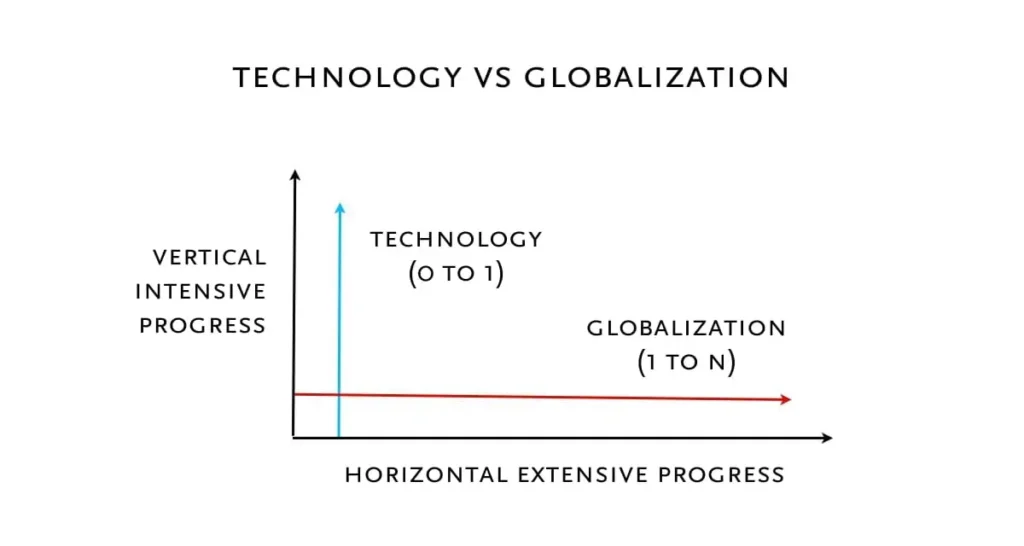
Doing new things was hard for me. If I knew how to innovate, I wouldn’t have spent 20 years in a job. So I chose the second path: copy what works.
Now the question was: what was the right way to copy something?
The answer came from a Tony Robbins quote I found in Russell Brunson’s phenomenal book “Dotcom Secrets”.
If you want to achieve success, all you need to do is find a way to model those who have already succeeded.
In other words:
- Find successful businesses.
- Study their funnels.
- Identify what can be improved.
- Build on top of that.
This isn’t new. People have done it for ages.
If you want to become a better writer, you don’t start from scratch. You read great writers and copy their work by hand to understand how they think. Hunter S. Thompson typed out “The Great Gatsby” to feel the writing style.
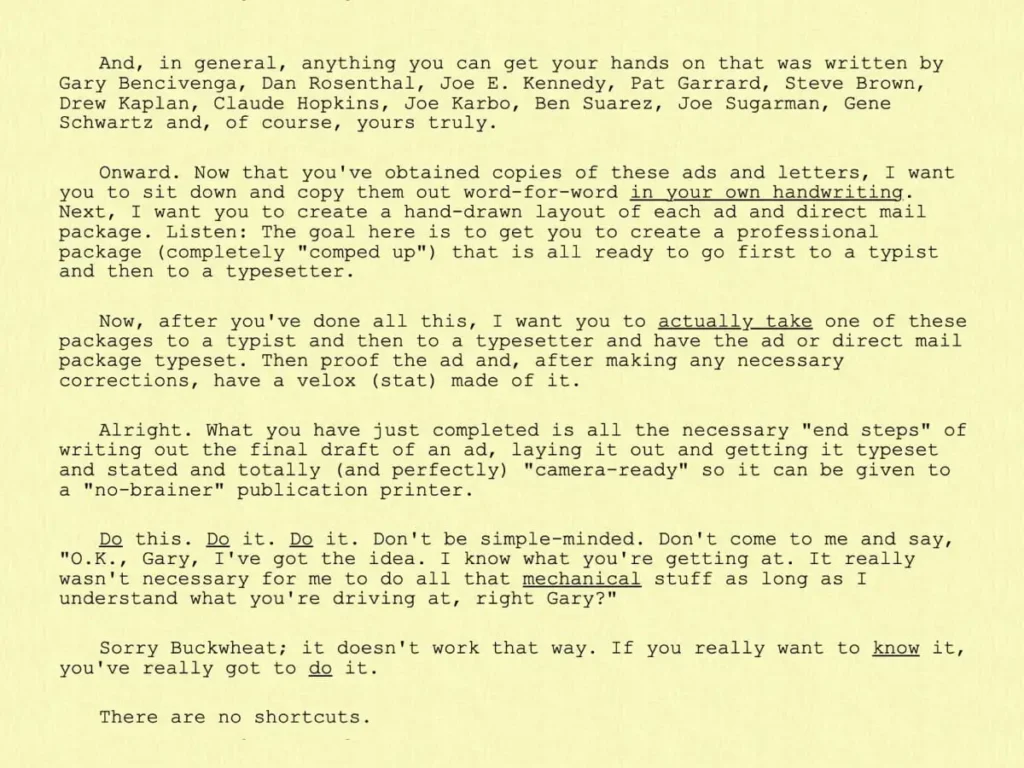
The same applies to business. And since every business is a funnel, the best way to learn is to copy one. So I did.
I hacked successful funnels to understand how they get the results. And that’s where things started to get interesting.
How to Perform a Funnel Hack
One day, while I was contemplating my situation, a friend of mine, Karishma, who runs a travel business, asked me, “How do I sell travel packages online?”
I didn’t have an answer. But I had an idea. Why not test something I had been reading about: Funnel hacking.
So I went to Google and searched different keywords:
- Travel packages to Bali
- Dubai tour packages
- Best Thailand packages
I did the same on Instagram and Facebook. And within minutes, I started seeing ads for travel packages everywhere.
At that point, I didn’t know which funnels were actually making money. So I became a customer and clicked on every link, every ad, and every reel to see how they sell.
Tip: If you see an ad multiple times, it’s likely converting. That’s why they keep showing it. You can also search businesses online to see how successful they are.
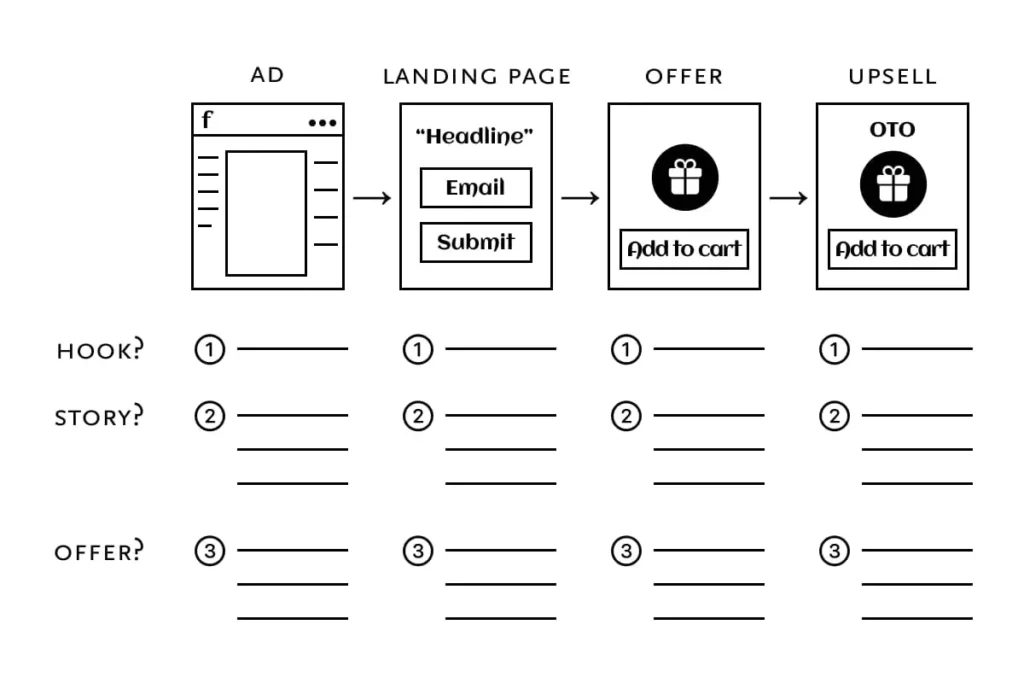
Wherever I landed, I wrote down the hook, story, and offer on that page. Again and again. Sometimes it was a presell page. Other times, a squeeze page. Sometimes, just a WhatsApp chat.
I filled out every form to share my travel dates, budget, and preferences. I shared my email to read their onboarding messages and receive their quotations. I gave my phone number to understand how they talk, persuade, and close.
In return, they responded with customized itineraries.
PDFs. Emails. WhatsApp messages.
I negotiated with them, asked questions, and watched how they reacted.
- What stories did they use?
- How did they justify the price?
- What made the offer feel irresistible?
Then I went to the final step: the purchase. What were the payment options? Was there a money-back guarantee? Were they upselling anything else? I went through their entire process to understand how they were getting results.
What I Discovered
After going through 10 to 15 funnels, patterns started to emerge. I understood that I didn’t need to reinvent anything. I just needed to build. So I created my own funnel with my own content.
- Where they had a headline, I had one.
- Where they used images, I used mine.
- Where they placed a CTA, I placed one too.
But I only copied their structure. I didn’t copy their content. And then I improved on top of that.
I created better hooks, stronger stories, and more compelling offers, so my dream customer chose me over them.
I also realized I needed to model three types of business:
- Direct competitors: Same product, same audience (travel agencies).
- Indirect competitors: Different product, same audience (travel gear, clothes).
- Same funnel type: Businesses using the same funnel structure I wanted.
Because sometimes the best ideas come from outside your category.
Once everything was ready, I launched. And slowly, things started converting. It took time to refine, adjust, and improve, but it worked.
Turns out, the unsexy way works. But this wasn’t the end of the story.
A New Beginning
I won’t pretend I have it all figured out. I don’t. And there are still days I miss my old, stable and predictable life. But then I remind myself. That life came at a cost.
And this one?
It’s uncertain, but it’s mine. And maybe that’s the real trade.
Leave a Reply