
You know your dream customer, where they gather, how to attract them, and how to help them achieve their goal…
… and in the process, achieve yours.
That’s why you’ve built a value ladder that delivers a specific result at each stage of their journey.
Now the interesting part is:
Every funnel in your value ladder works more or less the same way. So if you truly master just one funnel, you’ll start to see how all the others work.
Nothing could be better than that.
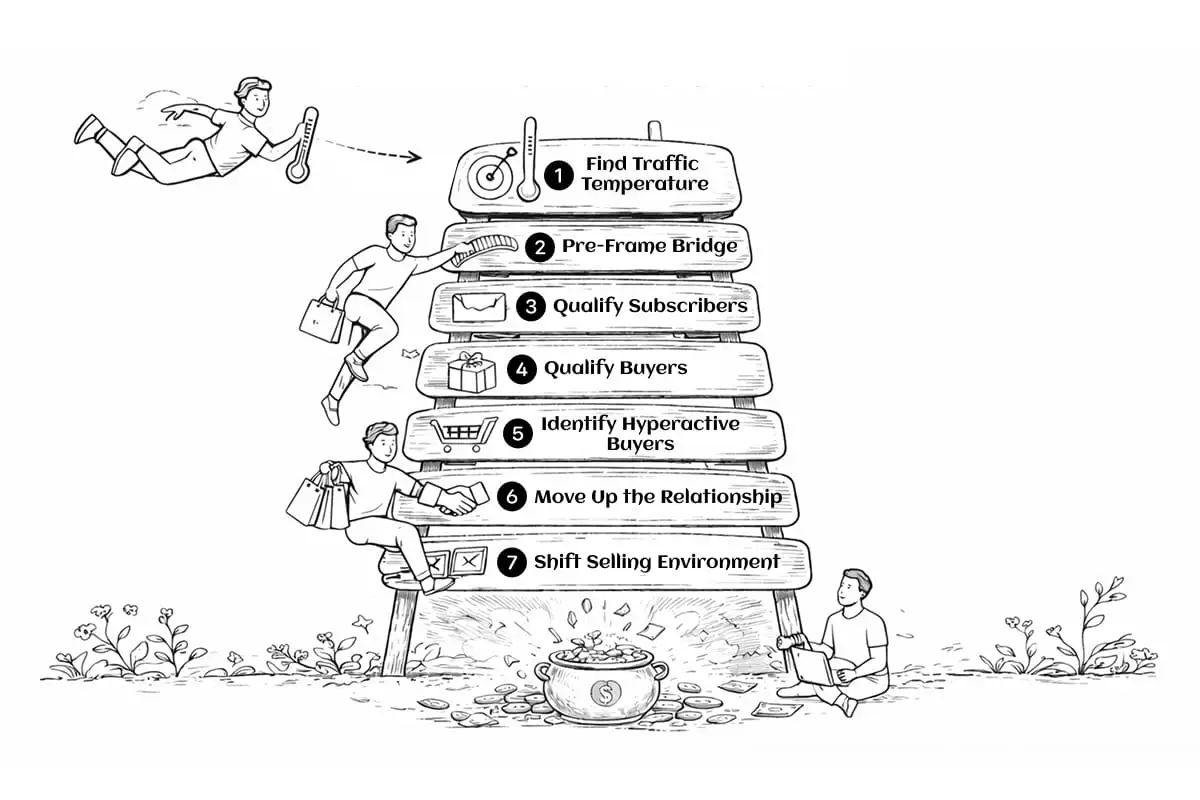
There are seven phases every funnel moves through. And when you understand them, you can guide your customer smoothly from one stage to the next.
The Seven Phases of a Funnel
- Find out the traffic temperature
- Construct the pre-frame bridge
- Qualify subscribers
- Qualify buyers
- Identify hyperactive buyers
- Move up the relationship
- Shift the selling environment
Let’s talk a bit more about these phases.
1. Find Out the Traffic Temperature
There are three types of traffic that land on your website: hot, warm, and cold. And each type needs a different approach.
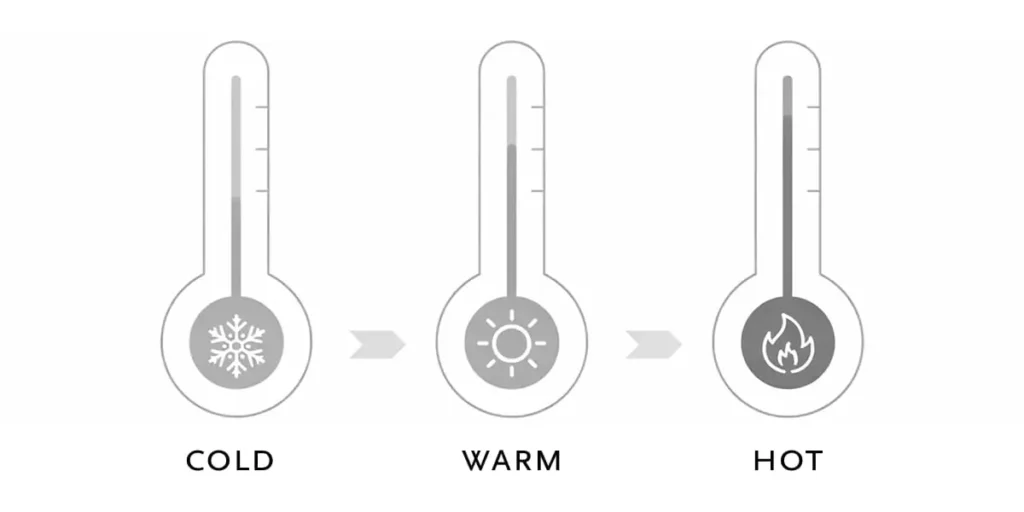
Hot traffic includes people who know their problem, understand the available solutions, and are aware of your solution. They typically follow you on social media, subscribe to your newsletter, listen to your podcast, and even send you fan emails.
Warm traffic includes people who know their problem and are aware of the available solutions, but don’t know about your product. You simply need to make them aware of it. They are often followers of other brands in your market.
Cold traffic includes people who know they have a problem but aren’t aware of possible solutions. They don’t follow any particular individual or brand, and that’s why they are the hardest to convert.
Once you understand these differences, you can build a separate bridge for each group to bring them to your landing page.
2. Construct the Pre-Frame Bridge
A pre-frame is simply a state of mind someone is in before they visit your website. Let’s say someone visits your Google page and reads a bad review about you:
This person cheated me.
Their product is a joke.
They have pathetic service.
And then after that, they land on your website. What do you think they feel? Their mind is already biased against you. No wonder they don’t convert.
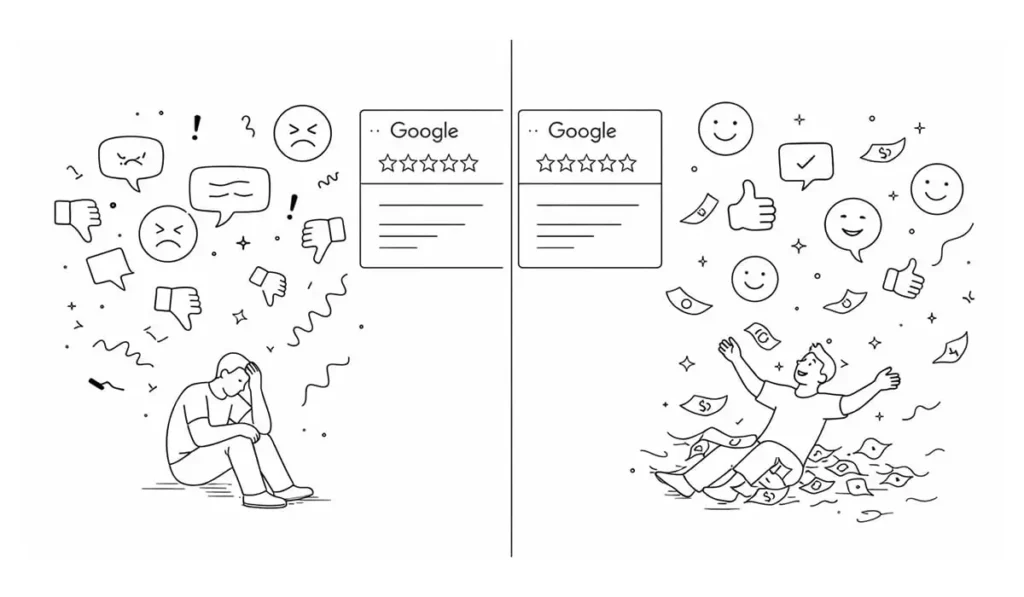
Now, imagine the same person reads a glowing review:
You are a down-to-earth genius.
Your product made them a better designer.
You are always available whenever they need you.
Now they arrive on your website with a completely different mindset. And the chances of conversion increase dramatically.
Same page but different mindset and different results. This shows that the pre-frame people arrive with matters more than what you say on the page.
Now the concept of pre-frame is clear, let’s construct a pre-frame bridge that shapes this mindset. A pre-frame bridge can be an ad, video, email, or article. Different traffic needs different bridges.
Hot Traffic Bridge
Hot traffic needs a very short bridge. As you already have an established relationship with your audience, you don’t need much effort to bring them to your page.
They already know you and your product. They are on your email list. You can simply send an email, post a blog, or record a podcast to show your offer and they’ll come.
Since hot traffic is aware of your product, your headline should start with the product.
Warm Traffic Bridge
Warm traffic needs a slightly longer bridge. They have desires but they don’t know you. So you meet them where they are.
If your audience is on social media, you can create a video to bridge the gap and move them from someone else’s audience to yours.
For example, Don Norman is a legend and you want to attract his traffic into your funnel. So you might create a video explaining how his books are insightful but largely theoretical. And then you introduce your practical course that helps designers understand how the market actually works and guide them into your funnel.
This pre-frame bridge gives them the context to understand why they need your product. And since warm traffic has the desire but not awareness of your product, your headline starts with their desire.
Cold Traffic Bridge
Cold traffic needs the longest bridge because often, people don’t know they have a problem, let alone solve it. Sometimes, they can’t even articulate it. So you educate them first.
This usually requires a separate bridge page before your landing page. This pre-frame bridge page builds awareness and prepares them to understand your offer.
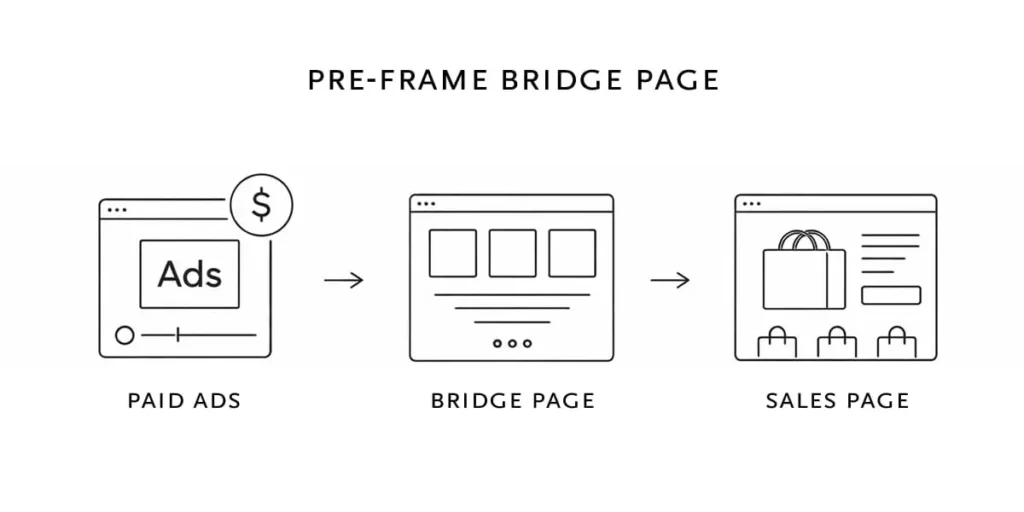
For example, many UX designers talk about the impact they make. But in reality, much of that impact is limited to tools, trends, and frameworks. They often lack an understanding of how the market actually works. Deep down, they want practical knowledge but don’t know where to begin.
This is where your pre-frame bridge comes in. You might start with a line like:
“Stop learning tools to save your job. Start learning how to sell.”
Then you educate them step by step. By the time they reach your landing page, everything makes sense to them.
A great real-world example is Zerodha. They built Varsity to educate beginners about the stock market. And then converted cold traffic into customers.
Since cold traffic is only aware of a general problem, your headline starts with the problem.
3. Qualify Subscribers
If you’ve noticed, every phase of your funnel has a goal. In the first phase, you have identified the temperature of your traffic. In the second, you constructed separate pre-frame bridges to bring that traffic to your landing page.
In this phase, the goal is simple:
Find out who is willing to give you their email in exchange for more information.
And you do this through an opt-in or squeeze page. You offer something valuable (a lead magnet) in return for their contact information. A lead magnet could be:
- A free chapter of your book.
- A free template to build their funnel.
- A free video showing your process.
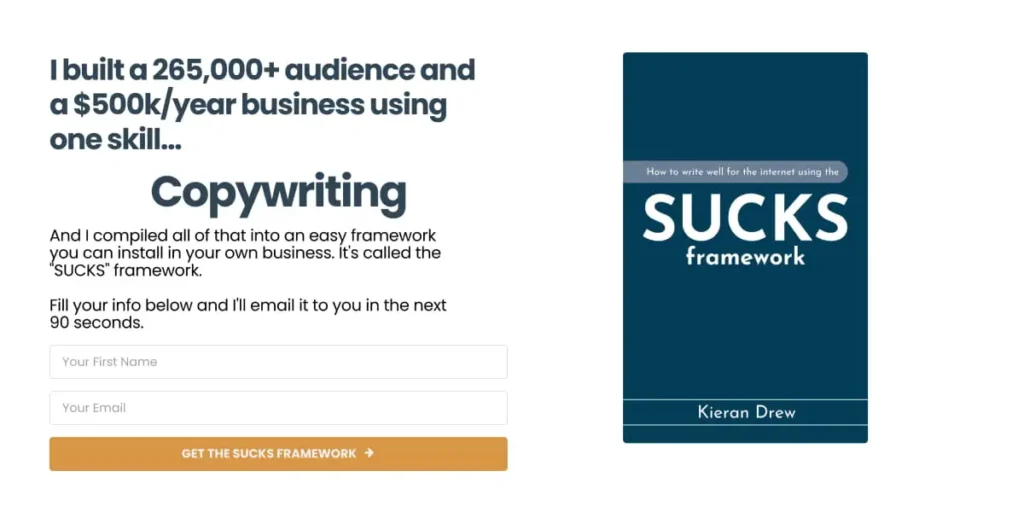
At this point, if people aren’t willing to give you their email, they’re highly unlikely to give you their money later.
If 100 people visit your page and 30 give you their email, that’s a 30% conversion rate. These 30 people are your leads.
4. Qualify Buyers
The next step is to find out who among those 30 subscribers is a buyer. So as soon as someone opts in, send them to your sales page and offer a low-ticket product. The goal is not profit but to identify buyers. So keep it in the ₹299–₹999 range.
Once you know who your buyers are, you can invest more in them. You can call, email, and give special offers. You can do things for them that you wouldn’t normally do for subscribers. A buyer is worth more than 100 subscribers.
At this point, you have two groups:
- Subscribers
- Buyers
Each one is different and should be treated differently.
5. Identify Hyperactive Buyers
These are your dream customers—people who are ready to spend more to solve their problem.
A few years ago, I was scrolling through my X feed when I stumbled upon a post from someone named Kieran Drew. He wrote about how he left his job as a dentist to become a writer. I spent the rest of my day reading hundreds of his posts. I wanted to know everything about him.
While going through his content, I discovered others like Dickie Bush, Nicolas Cole, Justin Welsh, and David Perell. All of them had built careers around writing. I was hooked. I spent weeks consuming everything they shared.
I wanted to become like them.
But no matter what I did, I couldn’t write like them. Frustrated, I realized this wasn’t enough. If I wanted real progress, I had to invest.
At that moment, I became a hyperactive buyer. I started buying everything that promised to help:
 |
 |
 |
 |
When you’re in pain or when you feel an itch, you want to scratch it immediately. That’s how hyperactive buyers behave. The moment pain peaks, the wallet opens.
You must identify these people quickly and help them. Because if you don’t, someone else will. That’s why upsells and cross-sells inside your funnel are so important.
Now that you’ve identified hyperactive buyers, place them into a sub list. You’ll definitely want to invest more in those who spend ₹24,999 than in those who spend ₹999.
6. Move up the Relationship
When you reach this stage, the sales process is almost done. Phases one to five happen quickly.
In the next two phases, your attractive character comes into play. It takes your new customers—subscribers, buyers, and hyperactive buyers—and guides them up your value ladder.
Here, you use follow-up funnels to build a relationship with them. Because the real money is not in the first sale, it’s in the relationship that follows.
7. Shift the Selling Environment
Now, the funnels at the back end of your value ladder contain your high-ticket products often worth lakhs of rupees. And typically, they’re hard to sell online.
If you’re lucky, very few people might read your sales letter and click the “Add to Cart” button. But most won’t. So you need to change the selling environment and make it more personal.
Call them over the phone.
Invite them to a seminar.
Send them direct mail.
Because high-ticket sales don’t happen in funnels. They happen in conversations. Here, you’re not just selling a product. You’re selling a transformation. And that takes time.
You need time to listen to their feedback, handle their objections, and help them make a decision. Once you do that, you can tailor your offer to their needs. And suddenly, closing the sale becomes much easier.
Final Thought
These are the seven phases of a funnel. The next time you build or hack a funnel, observe: how traffic moves, how buyers are identified, how relationships are built, and how high-ticket products are sold
The devil is in the details. They may seem small from the outside, but they make all the difference. That’s what makes one business succeed and another fail.
Leave a Reply