
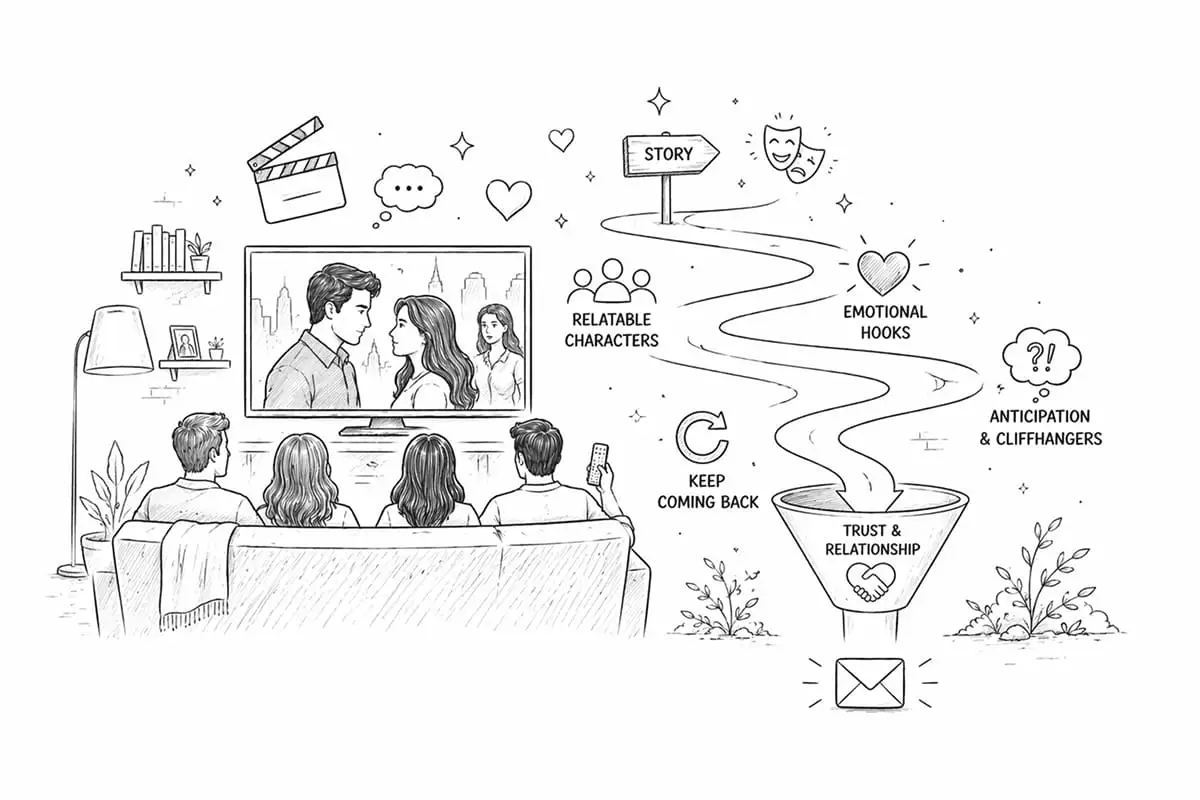
Why do most information products start with an opt-in or a squeeze page? If they’re giving the product away for free, why ask for your email?
The reason is simple:
If they don’t, the moment you leave the page, you’re gone.
And once you’re gone, they have no way to reach you again. How will they build a relationship with you? How will they earn your trust? How will they sell you anything else?
They need at least an address to reach you. And your email is that address. It’s a place where they can reach you anytime, send you offers, track how you respond, and understand what you actually care about.
But getting your email is only half the game.
The real question is:
What kind of traffic are you?
Because not all traffic is the same. Some people browse, some subscribe, and some buy. And if you treat all of them the same, you lose.
That’s why understanding traffic is everything. It’s the first step to building an email list that actually makes money.
So before we talk about what to send, let’s figure out who you’re sending it to.
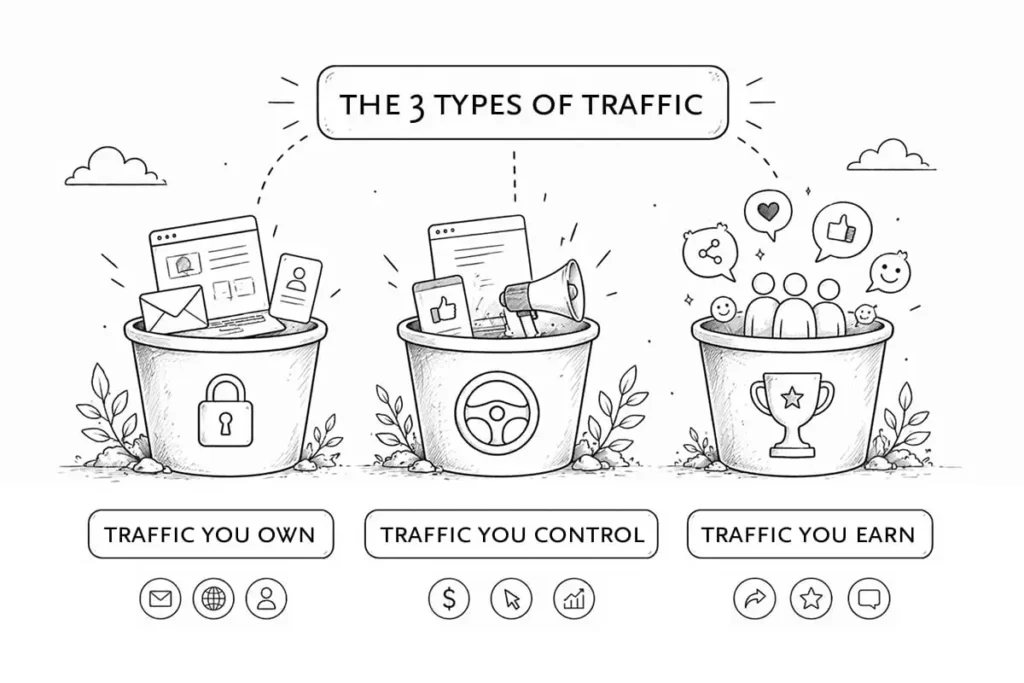
The 3 Types of Traffic
Every visitor who lands on your page falls into one of three buckets:
- Traffic you own.
- Traffic you control.
- Traffic you earn.
Most businesses treat them the same. That’s why most of them struggle to convert it.
1. Traffic You Own
This is the most important and the very best kind of traffic you can have. It includes your email list, followers, and customers.
You own this traffic because you can reach them whenever you want and generate traffic on demand. You don’t have to pay for ads every time you want visitors, and you don’t need SEO or PR to get in front of them.
You can sell things to these people and keep all the money without paying any commission.
2. Traffic You Control
You control traffic when you can direct people wherever you want.
For example, when you buy ad space on Meta, you don’t own the traffic that comes from it. But you can control where those people go by sending them to your landing page.
All paid traffic is traffic you control, whether it’s pay-per-click, banner, or email ads.
Although it’s good traffic, every time you use it, you have to pay for it. And the moment you stop paying, it disappears.
That’s why it makes sense to direct all your paid traffic to your opt-in or squeeze page first. The reason is simple:
- Your traffic gets a chance to try your product in exchange for their email. This increases the likelihood of them buying your paid product later.
- Once you get their email, the traffic you control becomes the traffic you own.
Lately, it’s become increasingly common for people to get banned from social media for petty reasons.
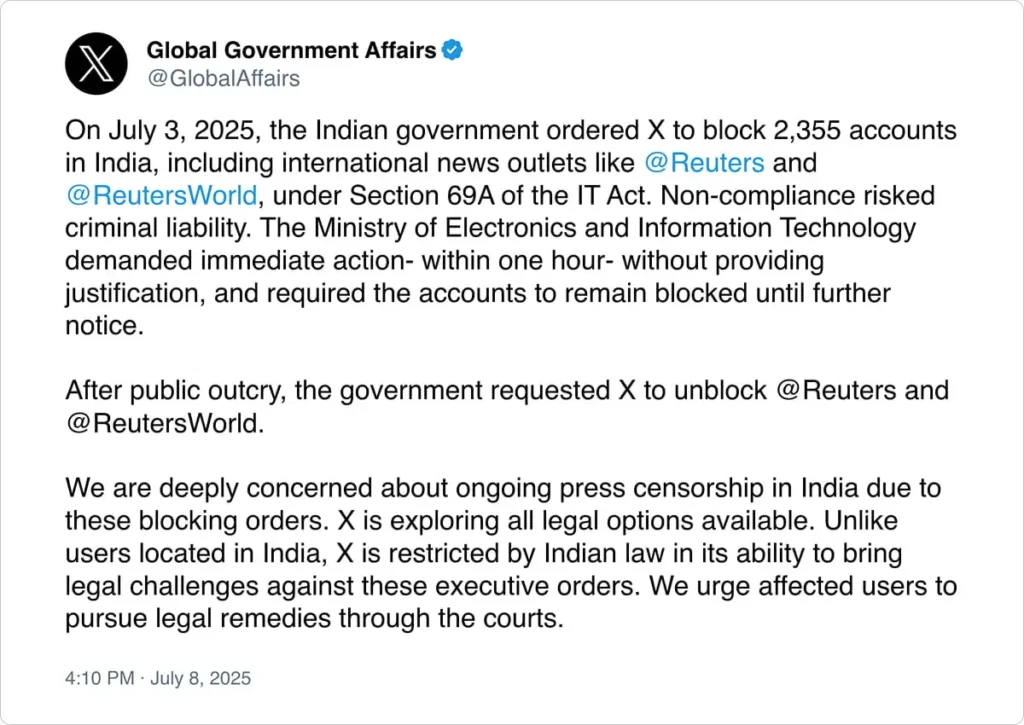
You don’t want to build your business on something you don’t control. So don’t rely on a platform. Convert the traffic you control into traffic you own as soon as possible.
3. Traffic You Earn
This is the traffic you don’t control but earn. It happens when people talk about you in their videos and podcasts, mention you in their books and blogs, or tag you in their posts.
All of this creates curiosity among their audience. So they search for you and may eventually land on your website.
Although you’ve earned that traffic, you don’t control any part of its journey. You don’t know who they are, where they come from, and what they’re looking for. Which means you can’t rely on it.
Your goal, therefore, is to convert it into traffic you own. And the best way to do that is to direct this traffic to your funnel hub, where all your funnels live.
From there, people can choose where to go and exchange their email address for something valuable. And the moment they do that, they stop being anonymous visitors. They become traffic you own.
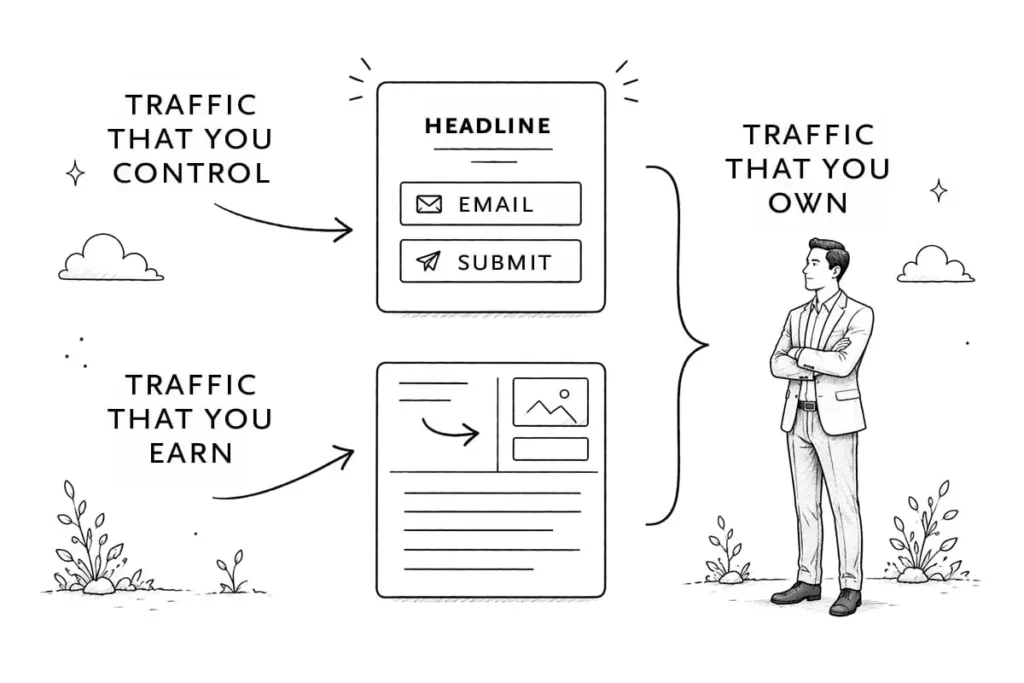
At the end of the day, your ultimate goal is simple: Turn traffic you control and traffic you earn into traffic you own.
Because that’s the only traffic you can rely on.
After you convert your traffic into subscribers, your attractive character can start talking to them through your follow-up funnels.
Follow-up funnels are where everything changes because now you’re no longer just getting traffic. You’re building a system that turns attention into relationships, and relationships into revenue.
Follow-up Funnels
It’s not necessarily true that the traffic you’ve just converted into subscribers will buy from you. Sure, some of them will but most won’t because most people don’t buy immediately.
They need more validation, a little hand-holding, a gentle push.
Think of it this way: Your customers are the heroes of their own stories. They have a desire but something is standing in their way.
And that’s where you come in.
Your attractive character is the guide—someone who has already walked the path and can show them how to reach where they want to go.
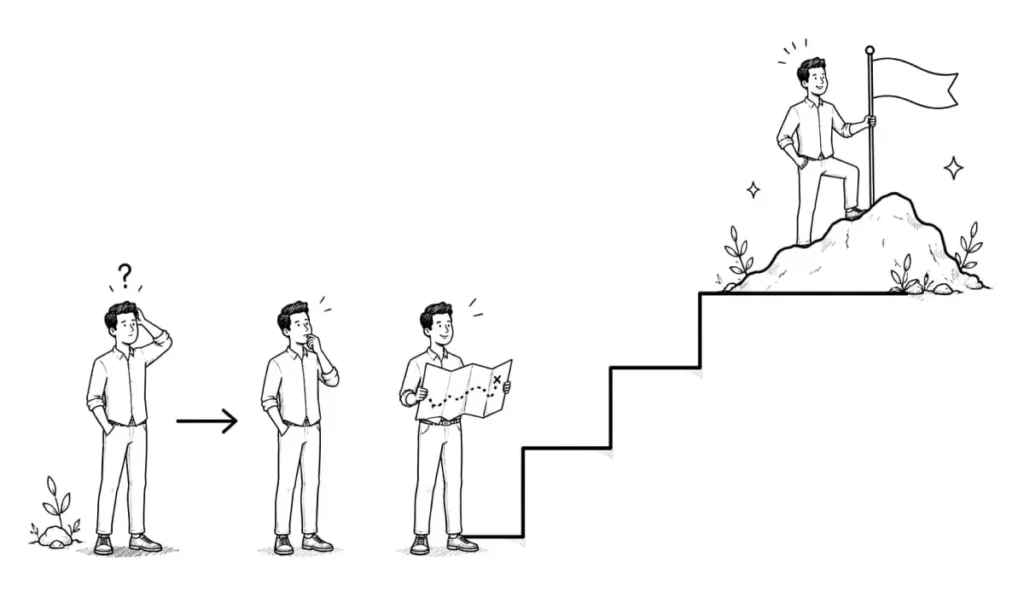
Your role is to find these heroes, grab their attention, and help them overcome their challenges so they can fulfill their desires.
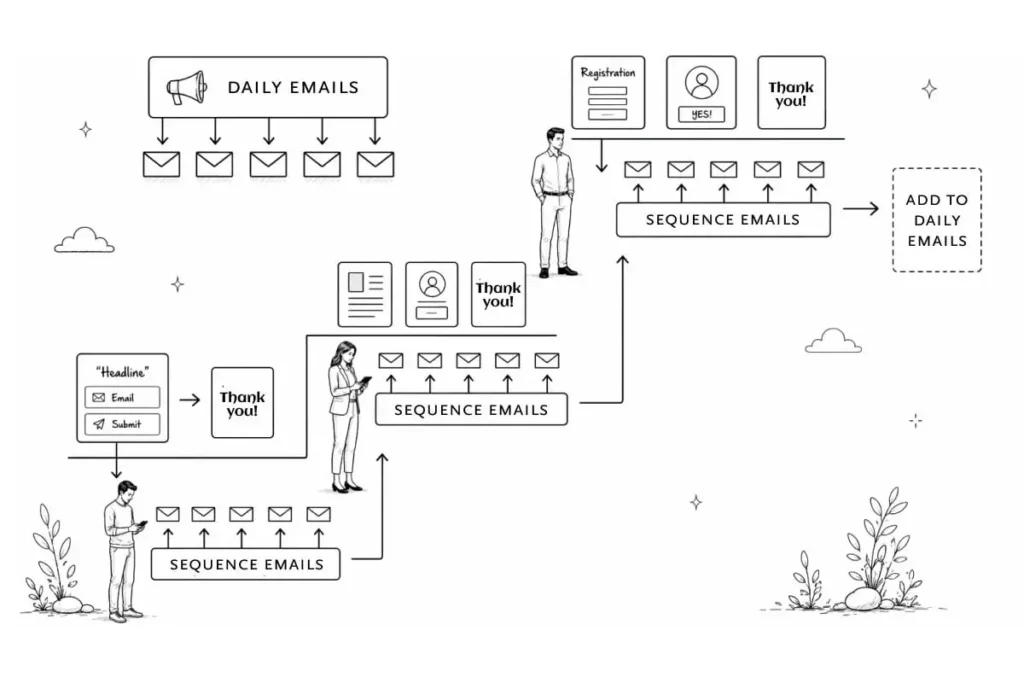
And you do that using follow-up funnels. These funnels move your audience step by step through your value ladder.
Inside these follow-up funnels, you send two types of messages:
- Sequence Mails
- Daily Mails
Let’s see what they are and how they work.
1. Sequence Mails
These are a series of related messages sent in a particular order.
Their goal is to build a relationship quickly, pull prospects through the initial funnel, and move them to the next funnel.
But people only read your emails if they find them interesting. If your first email is boring, they won’t open the second. So you have to hook them from the very first email.
And the best way to do that is through an open storyline. You build momentum so they look forward to your next email … and then the next.
This is where soap operas become powerful teachers. Think about how they keep you engaged:
Characters get into trouble or get out of it.
They fall in love or break up.
They fail or make a comeback.
Something is always happening and every episode ends on a cliffhanger. You’re left wondering what happens next. And that’s exactly why you come back.
Your emails should work the same way. You create a continuous narrative that never fully closes. With each email, you increase the intrigue until people start waiting for your next message.
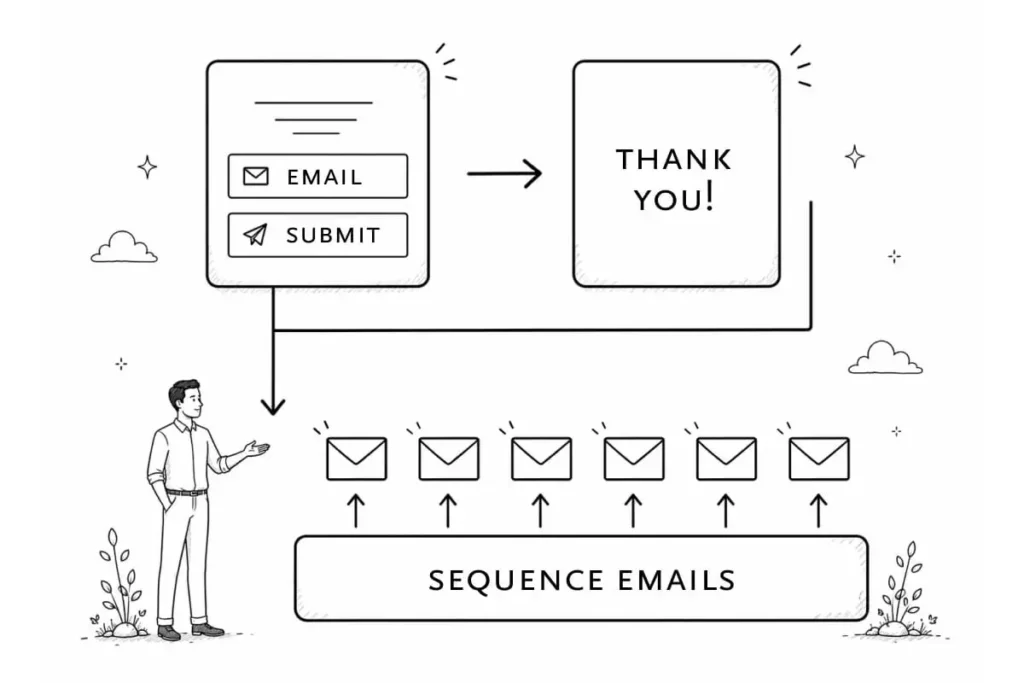
There are many story structures you can use to craft your sequence emails:
Email 1. Set the stage: The first email sets the stage for what’s coming next.
Email 2. Open with high drama: The story begins, and the selling process starts.
Email 3. Epiphany: Reveal the key realization that connects directly to your product.
Email 4. Hidden benefits: Highlight benefits they might not have considered.
Email 5. Urgency and CTA: A final push to take action now.
That’s how the sequence works: email #1 pushes the reader to email #2… email #2 pushes the reader to email #3… and so on.
Your emails should be easy to read and fast to scan. So don’t write more than one or two sentences per line.
If you have only one funnel in your value ladder, move prospects from this sequence mail into the daily email list.
If you have other funnels, move prospects from this sequence into the next sequence in the value ladder.
2. Daily Mails
You send out daily mails to people who are not in one of your follow-up funnels. Here, the goal is to reengage your prospects and get them back into your value ladder.
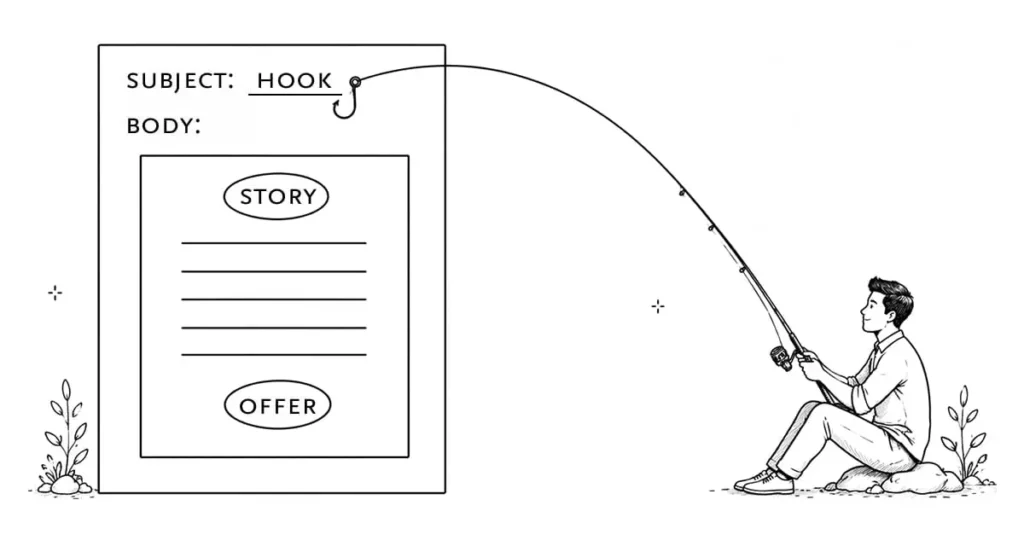
So, rather than following a sequence, use anecdotes, stories, how-to things to make them entertained. Use the Hook, Story, Offer structure:
The email subject line hooks prospects to open the email.
The body tells a story that entertains them.
The offer ties back to your core offer.
You can use one of these three styles of emails:
Episode Style
Tell a story about what happened today in your life, tie it back to your core offer, or share a controversial topic in your industry.
Epiphany Style
Talk about ideas—inspirational, enlightening, or thought-provoking. Challenge existing beliefs. Help your readers have an epiphany that ties back to your core offer.
Educational Style
These may be checklists, how-tos, Q&A’s, or FAQs that you can use to guide people back into your core offers.
Each day, you throw out a different hook, tell a different story, and lead people to whatever you are selling.
If you just send entertaining emails and don’t tie in your products, you won’t make money, even if you’re the best storyteller in the world. Every email and every story must be tied back to some kind of offer.
At the end of the day, funnels don’t fail because of bad design or weak offers.
They fail because there’s no follow-up.
Traffic will come and go. Platforms will change. But the relationship you build with your audience is what lasts.
Leave a Reply