

Have you seen those annoying pop-ups that show up while browsing—especially on shady, pirated sites?
I used to hate them. Actually, hate is too polite, I despised them.
Until I became a business owner. Funny how that works.
Because the moment you stop being a UX designer, you stop asking:
“Why would anyone do this?”
And start asking:
“How much money is this making?”
And that shift changes everything.
Look, great UX matters. But a business that doesn’t make money doesn’t get to have good UX. It just dies.
For years, pop-ups were everywhere. They were annoying, but they worked.
Marketers used them to build massive email lists and generate leads. And that’s why they survived for so long.
But they came at a cost. They covered your screen, interrupted your reading, and hijacked your attention. So, naturally, people pushed back.
Browsers introduced pop-up blockers, users started avoiding such sites, and marketers toned things down. Even Ethan Zuckerman, the man who created pop-ups, later apologized for what they became. Over time, pop-ups were declared dead.
Except they weren’t.
They didn’t die.
They evolved.
Lead Squeeze Funnels
History shows that necessity drives innovation. When pop-ups stopped working, marketers didn’t give up. They asked a better question:
What if the problem wasn’t the pop-up, but where it appeared?
What if, instead of interrupting the experience, it became the experience?
No overlays or interruptions, just a dedicated page with a simple exchange:
Value → in return for an email.
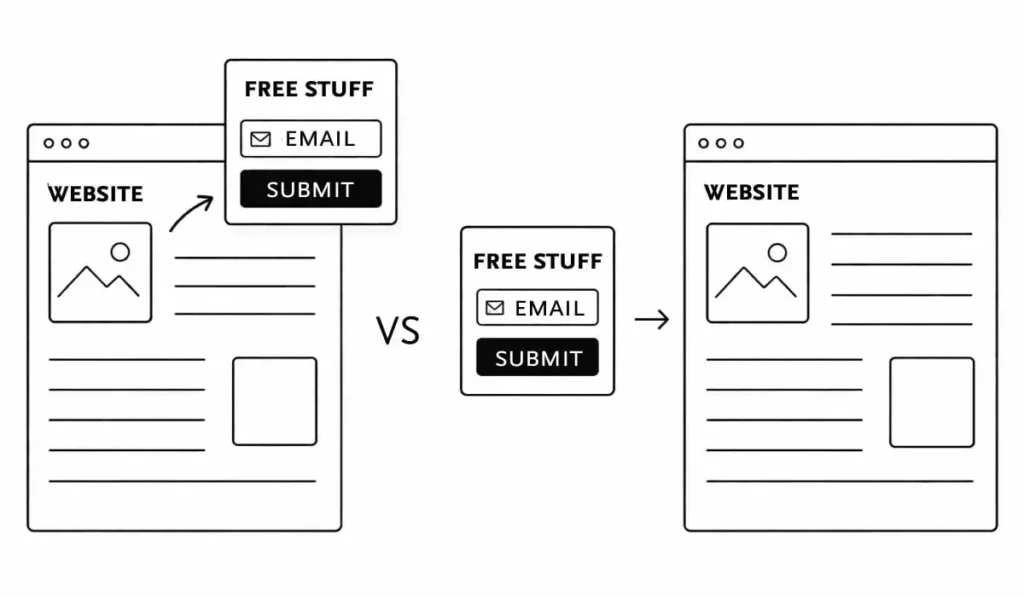
And if the offer is strong enough, people don’t resist. They opt in willingly.
Yes, fewer people reach the main website. But the ones who do, they’re not just visitors anymore. They’re leads and that changes everything. Because now you can follow up. And that’s where the real money is made.
That’s how came into existence a lead squeeze funnel.
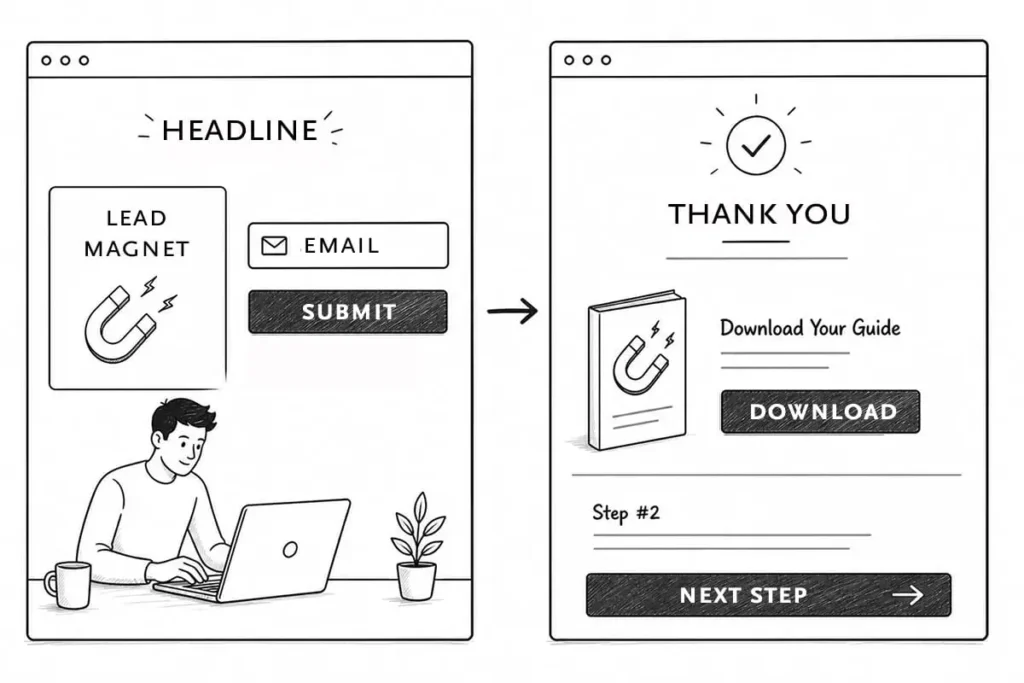
Its setup is simple. You just need two pages:
- The squeeze (landing) page
- The thank-you page
That’s it. And using it, countless people have built businesses worth millions of dollars. If they can do it, so can you. So let’s see how these pages work.
Page 1: The Squeeze / Landing Page
Most squeeze (or landing) pages rely on three elements: Hook, Story, and Offer.
Hook: Every squeeze page has a headline that serves as a hook. The more curiosity your headline creates, the higher your chances of getting your dream customers’ email addresses. If your conversion rates are low on your squeeze page, there are two likely reasons:
- Your offer (lead magnet) is not good enough
- Your headline doesn’t generate enough curiosity
Fix those, and conversion improves dramatically.
Story: On a typical squeeze page, the subheadline is enough to quickly tell a story. A long story may distract users from the offer. You don’t want that.
Always try to create an offer that is strong and easy to understand. If your offer needs explanation, use a “reverse squeeze page”. It’s simply a page where you use a video instead of an image to tell your story, explain your offer, and ask for the opt-in.
Yes, you’ll get low conversation rates but the leads that come through are usually more qualified.
Offer: You can combine a hook and an offer to make it more powerful. The goal is to offer something your dream customers can’t say no to. In other words, create a lead magnet. Just like a magnet attracts iron, your offer or lead magnet should attract your potential customers.
In the example below, the lead magnet is simple:
The Magnetic Writing Roadmap — 4 Steps to Build Your Business Through Writing Online
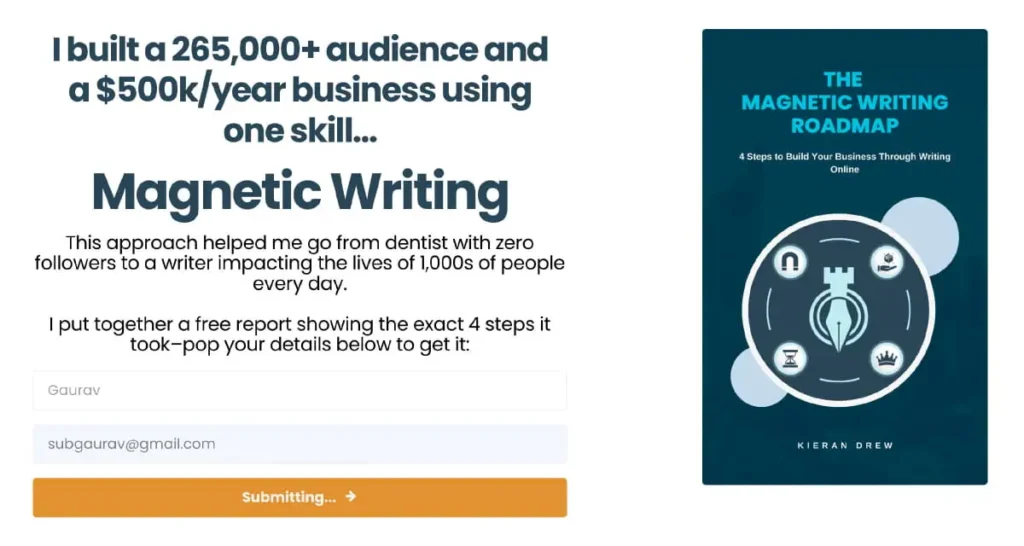
If your lead magnet is genuinely valuable, people remember you. They open your email, read your content, and move up your value ladder.
Your lead magnet could be anything—an e-book, a coupon, a contest, or a video.
Page 2: The Thank-You Page
When people enter their email and click submit, they land on your thank-you page.
Here, you thank them for joining your email list, and deliver the lead magnet you promised. Remember to ask them to confirm their email address to ensure it’s valid.
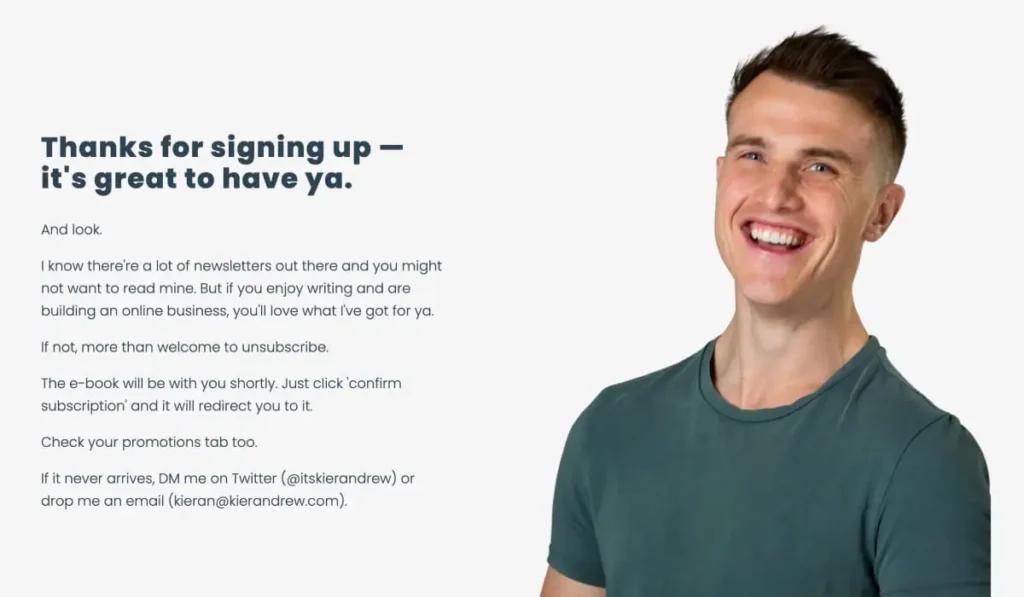
Once your audience receives the lead magnet, guide them into the next stage of your funnel and qualify them as potential buyers.
But if this is your first funnel, your focus should be simple: Build a relationship.
So use follow-up emails to connect with people who just joined your list.
And that’s how the first type of funnel—the front of the value ladder—came into existence.
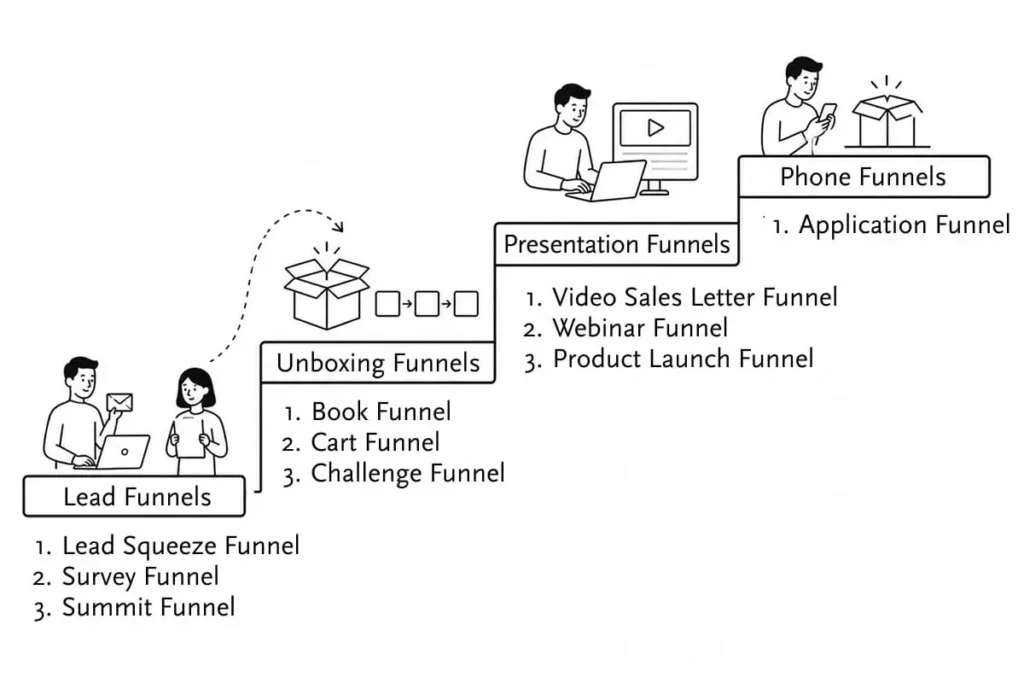
Later, marketers developed other types of lead funnels like survey funnels and summit funnels. But no matter the format, the goal remains the same:
Turn attention into a lead.
Leave a Reply