
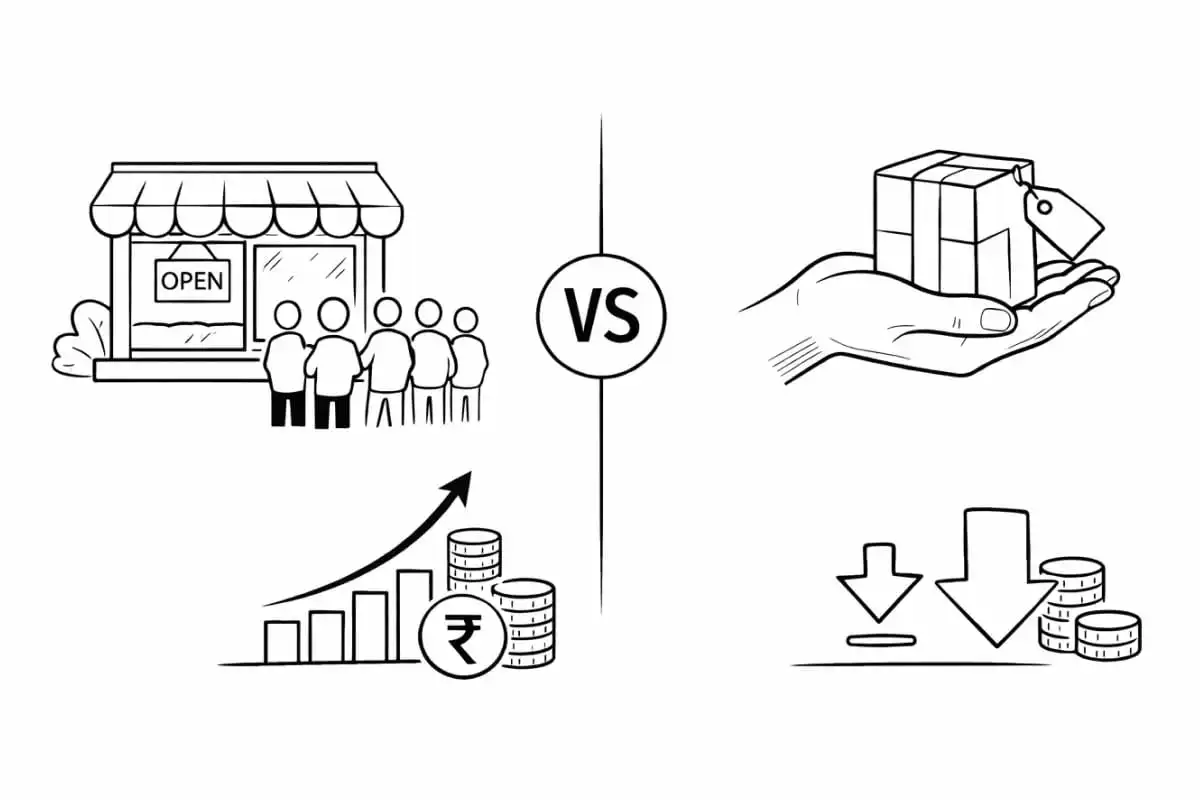
Buying traffic is easy. Converting them is hard. And turning them into repeat customers is even harder.
Look, most purchases are one-time transactions. People arrive, they buy, and they disappear.
If that’s your entire model, you don’t really own a business. You’re simply selling a product. A real business works differently. It provides distinct values to its customers at distinct price points.
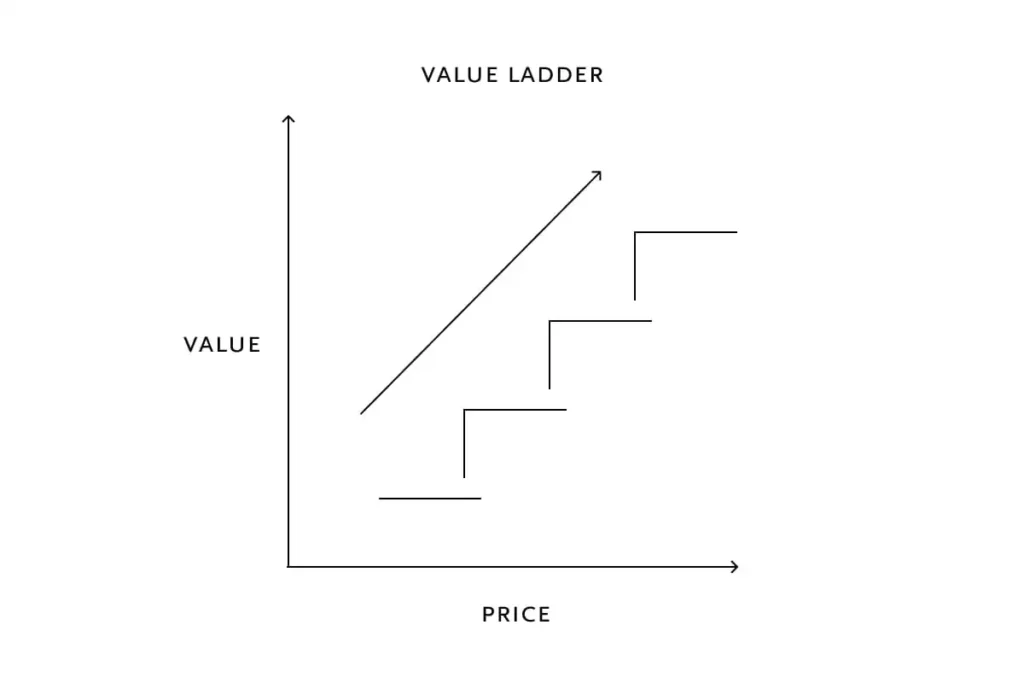
It’s like climbing a ladder. The higher you go, the more you receive, and the more you pay. That ladder of ascending value is called: The Value Ladder.
The Value Ladder
Imagine value on the left and price on the bottom. As customers rise through your ladder, both value and price rise with them. The value ladder teaches you how to craft multiple offers, how to position them at distinct price points, and how to use funnels to guide customers from one step to the next.
But before building your value ladder, you must have answer to these 3 questions:
- Who is your dream customer?
- What results are they chasing?
- How does your opportunity help them get there?
That becomes your value ladder mission statement and you can write it like this:
We help [who] to [achieve what results] through [what new opportunity]
After making this promise, you design distinct opportunities at each step, each delivering a higher level of value. And with every step users take, they move closer to their ultimate goal.
A Real Life Example
A few years back my friend Anup who is a UX designer, built his business around this concept. But he learned this the expensive way.
See, his value ladder mission statement was:
We help [Professional UX Designers] to [Learn Selling and Becoming Independent] through our [No-BS UX Design Anymore Course]
He used to sell a $199 UX course by pushing paid traffic straight to a landing page. And the page had everything marketers worship: clever hooks, a decent story, and an irresistible offer. Yet sales refused to happen. Why?
Because prospects didn’t trust him and they couldn’t judge the value in advance. Many weren’t even sure they had $199 to risk.
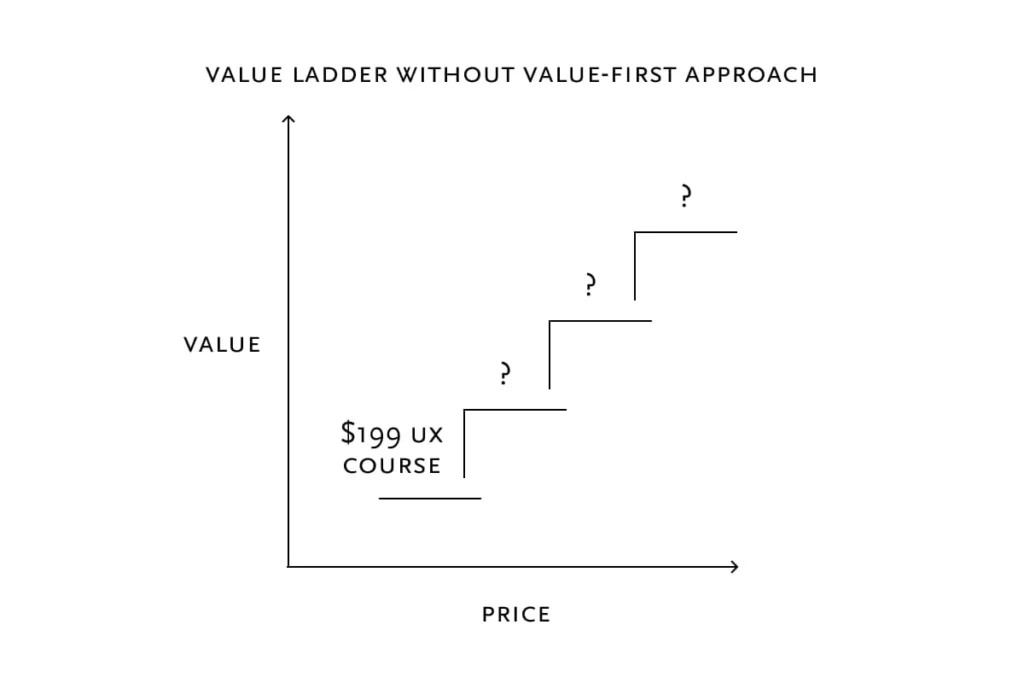
Frustrated, he told me about the situation. And not knowing any better, I suggested that he start by providing value first. So, he built a squeeze page that offered a free chapter of his UX course in exchange for an email.
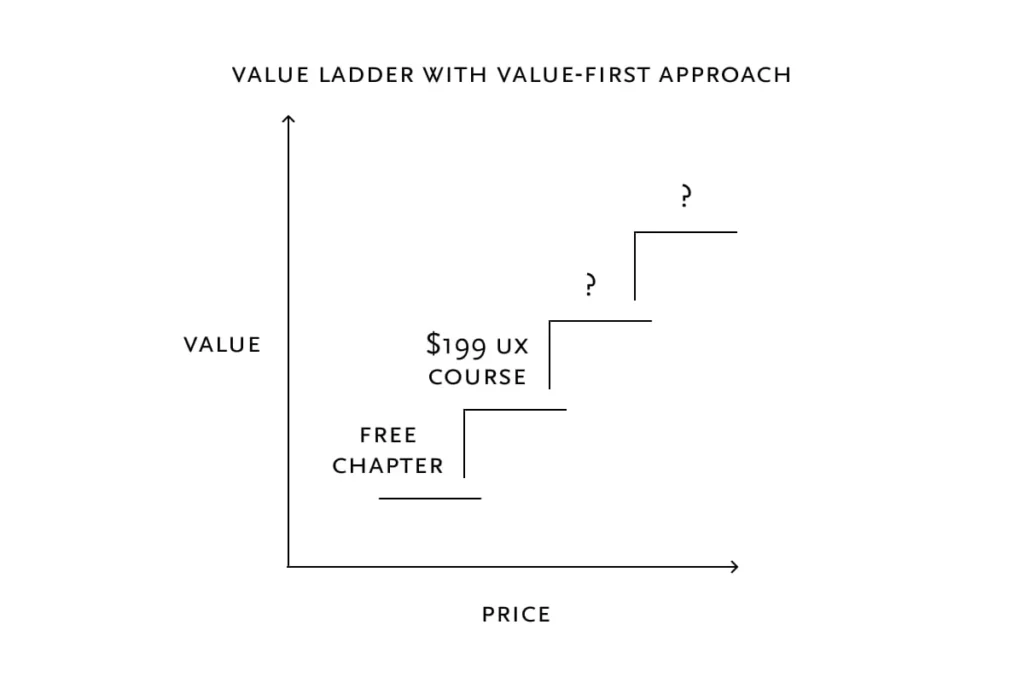
Now, people could experience him before paying. It made them think: “If the free stuff is this good, the paid course must be serious.” That single shift built credibility and gave people confidence to purchase the $199 step.
Once the outcome was proven, climbing higher felt natural. So he designed two more opportunities to help UX designers:
- A live event for $1,499
- A mastermind for $5,000
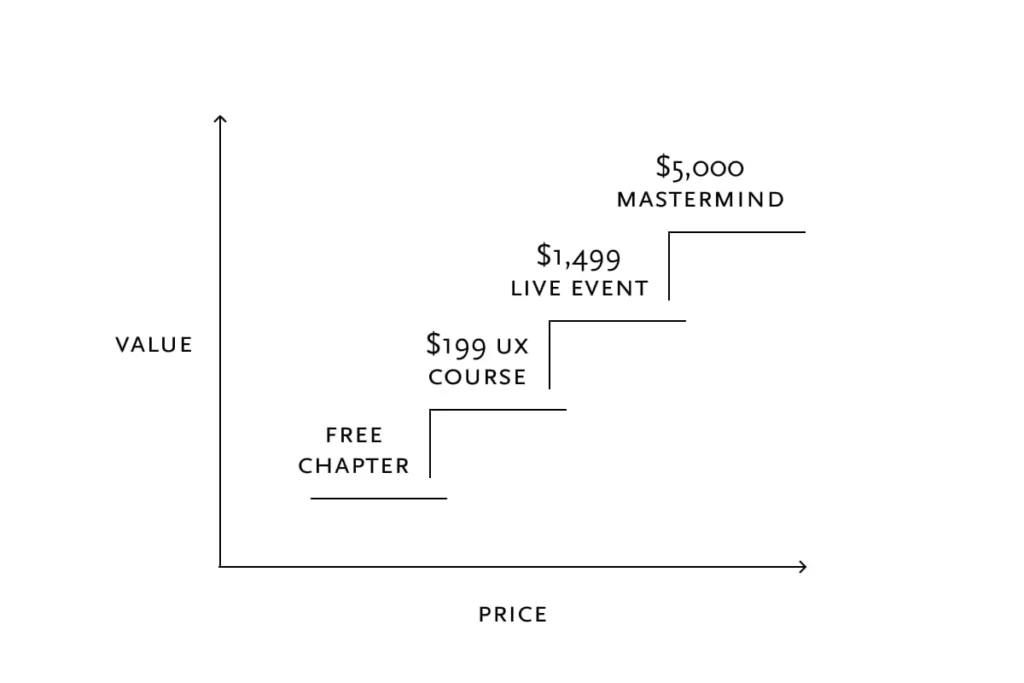
Now people can choose how much value they want. If they are satisfied with the free chapter, they can move up the ladder for more. If not, they can simply leave. There’s nothing to lose. They are in control. It’s up to them how far they want to go.
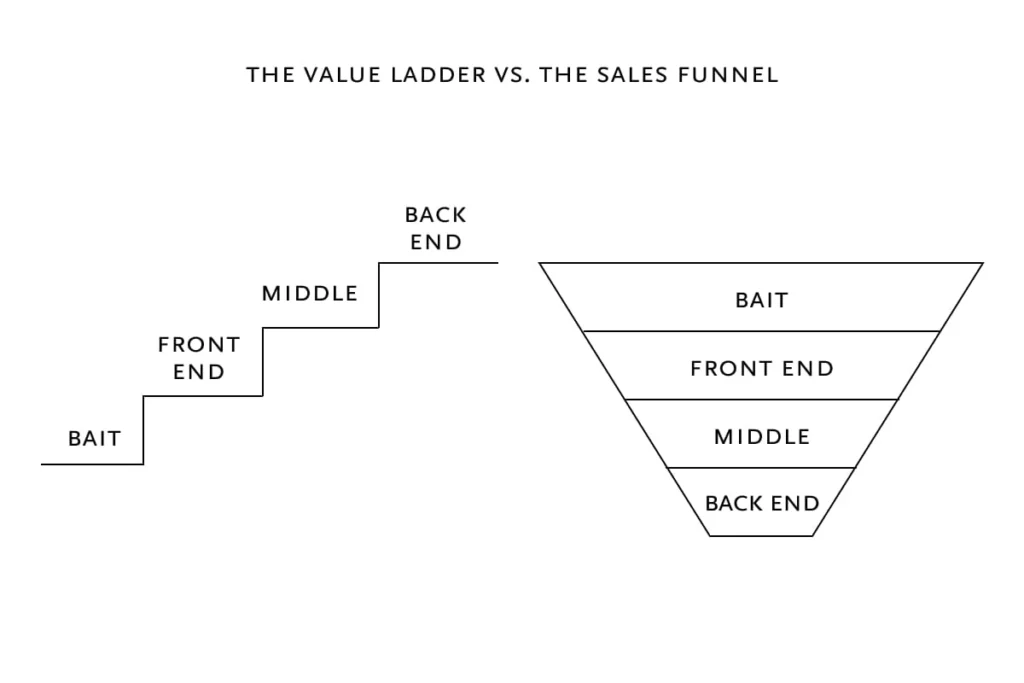
When you do this, naturally you’ll have more customers at the bottom of the value ladder than at the top and that’s okay. There are fewer customers at higher levels, but their commitment is deeper and the impact is greater. That’s exactly how a value ladder should work.
Funnels Must Evolve Too
Typically, you setup you ladder with a free or low-commitment offer and then put:
- front-end offers that you sell between $1–$100,
- middle offers around $200–$2,000,
- premium back-end offers above $2,000.
Your value ladder can be modest or massive. Size matters less than intention.
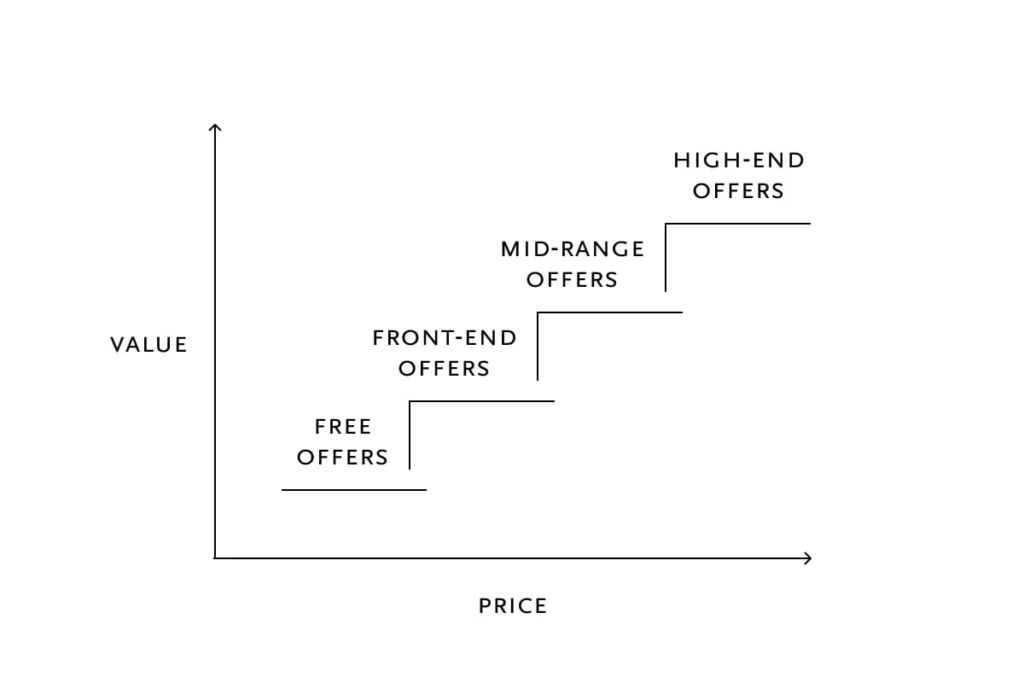
Since each level of your value ladder offers distinct value and has a different price point, you can’t sell them using the same funnel. Each level requires its own funnel.
- Free offers need simple lead funnels.
- Front-end offers need unboxing funnels.
- Middle offers require presentation funnels.
- Back-end offers demand phone funnels.
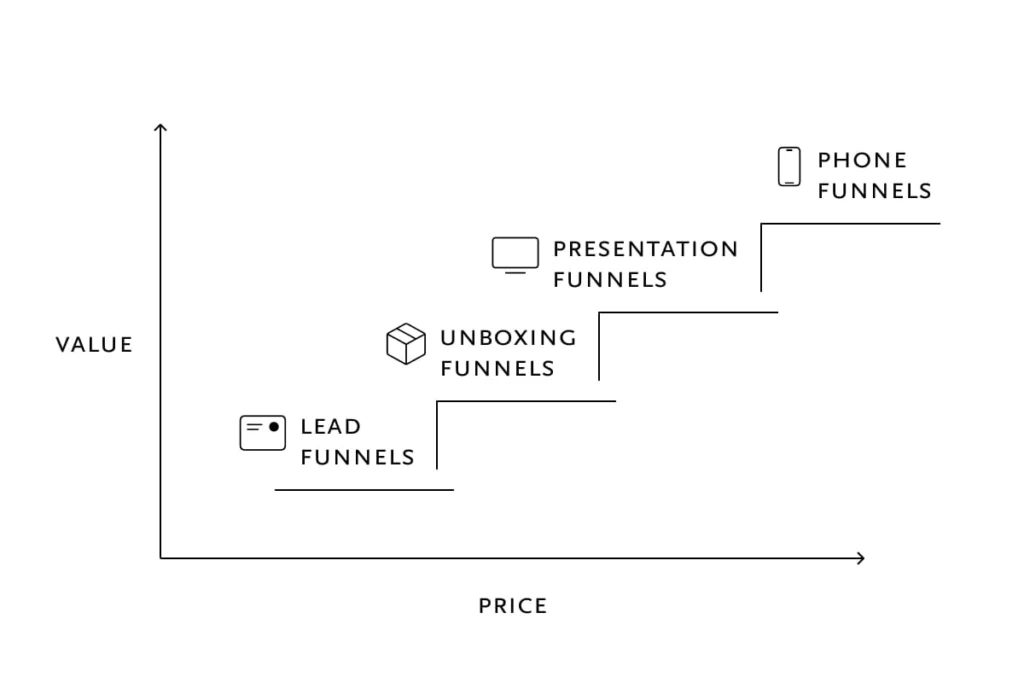
But no matter what funnel you use, the backbone never changes:
Hook → Story → Offer.
If conversions struggle, the fault is always hiding in one of these.
Fix those. Don’t fix the soul of your idea.
Leave a Reply